
How to Write an Adventure Story Step by Step


Adventure stories are full of excitement, brave heroes, and surprises. They take you to new places and spark your imagination. In this blog, learn to write adventure stories for kids, follow an easy step-by-step process for writing your own, and try writing an action-adventure story.
We will also explore how PlanetSpark helps students expand their creative expression and broaden their perspectives through fun and engaging Creative Writing Programs.
What is an Adventure Story?
An adventure story is a type of story filled with excitement, challenges, and unexpected events. It often follows a hero or a group of characters on a journey where they face danger, solve problems, and grow stronger. The main goal of an adventure story is to take the reader on a thrilling ride, whether it is exploring a lost island, climbing a mysterious mountain, or saving the world from danger.
For high school students, learning how to write an adventure story means understanding how to build tension, create brave characters, and design settings that feel real and exciting.
When you learn how to write an adventure story for kids, the tone becomes simpler and more playful, focusing on imagination and fun challenges.
Adventure stories are perfect for school projects because they let you use creativity while improving your English skills. Writing an adventure story in English or even a short adventure story in English helps you practice describing events clearly and keeping readers interested.
Adventure stories teach you that the real journey is not just about the destination; it is about how you grow, learn, and discover yourself along the way. Learn the steps to write an adventure story in the next part!
Steps to Write an Adventure Story
Writing an adventure story requires more than just having a wild setting; it means crafting a journey that pulls your reader right in. Whether you’re working on adventure stories for projects, an adventure story in English, or even a short adventure story in English, follow these key steps to learn how to write an adventure story, how to go about writing an adventure story, and, for a younger audience, how to write an adventure story for kids.
- Choose a clear mission: Your hero needs something important to achieve. This might be retrieving a lost map, rescuing a friend, or surviving a storm. Having a clear goal drives the story forward.
- Pick an unfamiliar or risky setting: Move your characters out of comfort zones into forests, caves, islands, or abandoned cities. The more unfamiliar the place, the stronger the adventure feeling.
- Introduce obstacles and rising risk: As the story progresses, add complications: bad weather, rivals, internal doubts, wild animals or villains. The tension must grow.
- Create vivid scenes that show rather than tell: Maybe in an adventurous story in 100 words, every word counts, describe sound, sight, emotion. Make readers feel the heart-pounding moment.
- Build character growth and teamwork: In a story for high school students, your hero should grow, learn something valuable, and become braver, wiser.
- Develop pacing and structure: Use a framework like the hero’s journey to keep your story moving introduction, conflict rises, climax, and resolution. Especially for how to write an action-adventure story, pacing is crucial.
- End with impact: The resolution should reflect the adventure’s cost and the character’s change. Leave the reader thinking, “That journey mattered.”
When you use these steps, you will be well on your way to writing an exciting adventure story that fits any assignment or project. Move further and learn to create interesting characters.

Create Interesting Characters
Your characters are the heart of your story. Whether you are crafting an adventure story in English for a project or teaching students how to write an adventure story for kids, strong characters make the story engaging.
- Main character with purpose: The hero should have a clear reason for the journey, such as proving bravery, helping family, or discovering something hidden. This creates an emotional connection.
- Strengths and flaws: A hero with only strengths feels flat. Give them a weakness, like a fear of heights or trust issues, to make the story realistic and relatable.
- Supporting characters and teamwork: Include companions such as friends, sidekicks, or mentors to create dialogue, conflict, and character growth.
- Change over time: Characters should grow. A shy hero may become confident after facing challenges, adding depth to the story.
- Make them relatable: Characters should feel real, with fears, hopes, and everyday lives, even in extraordinary settings.
- Distinct voices and goals: Each character should have clear goals, speaking style, and personality. This is important for short adventure stories in English or an adventurous story in 100 words.
Using these techniques, your characters will drive the story. Strong characters make your adventure story memorable and exciting.
Build an Exciting Setting
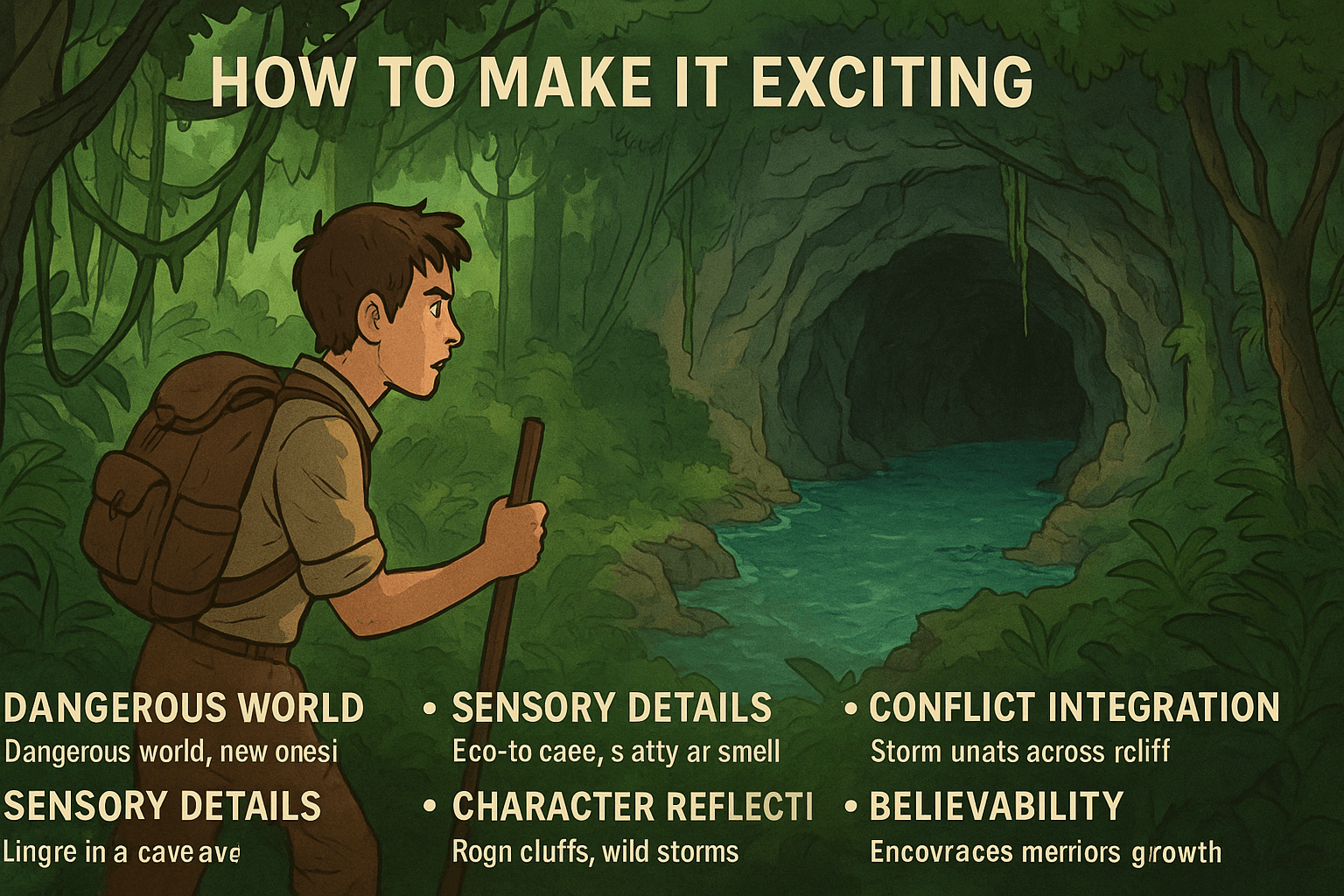
Creating a strong setting is one of the most important steps in how to write an adventure story. The setting is not just a backdrop; it becomes a part of the adventure itself, shaping challenges, tension, and the hero’s journey.
Here is a perfect visual breakdown of key elements to make your setting exciting and immersive:
With a strong and immersive setting in place, your story is ready to keep readers engaged and on the edge of their seats. Next, we will explore how to add fun twists and surprises, turning your adventure into an even more thrilling and unpredictable journey.
Add Fun Twists and Surprises
Twists and surprises make an adventure story exciting and memorable. Whether you are learning how to write an adventure story, how to go about writing an adventure story, or teaching students how to get your students to write an adventure story, unexpected moments keep readers hooked.
Twists can be secrets revealed by companions, sudden traps, or surprising obstacles that test courage and quick thinking. In action-adventure stories, add chase scenes, near misses, or unexpected rescues to raise tension.
Even in adventure stories for projects, short adventure stories in English, or adventurous stories in 100 words, surprises make the story dynamic. For how to write an adventure story for kids, keep twists imaginative and playful, like hidden doors or mysterious maps, while advancing the hero’s goal.
The key is to keep twists natural and believable, adding depth, testing characters, and moving the plot forward. Well-placed surprises make your story thrilling and unforgettable.

Avoid Common Writing Mistakes
When learning how to write an adventure story, it is important to avoid common mistakes that can weaken your story. Here are simple and crisp points to follow:
- No Clear Goal – Ensure your hero has a clear mission or challenge. Without purpose, the story loses direction.
- Flat Characters – Give characters strengths, flaws, and room to grow. This is important for how to write an adventure story for kids or high school projects.
- Over‑Description – Avoid long info dumps. Use details to enhance scenes in short adventure stories in English.
- Complicated or Random Plot – Keep the plot focused on the hero’s journey. Side plots should support the main adventure.
- Pacing Problems – Balance action, suspense, and calm moments. This is crucial for action-adventure stories.
- Inconsistent Setting – Maintain rules for the world, weather, and characters’ abilities to make the story believable.
- Predictable Twists – Avoid clichés; surprises should feel natural and engage the reader.
- Weak Ending – Show the hero’s growth and resolve the main conflict. Even in an adventurous story in 100 words, the ending should feel complete.
Following these points will make your adventure story in English or adventure stories for projects clear, exciting, and memorable.

Turn Ideas into Adventures with PlanetSpark Writing
Our Creative Writing Program helps children express themselves while improving structure, vocabulary, and coherence. Here are the key highlights:
Genre-Based Curriculum : Covers short stories, poetry, journals, essays, book reviews, and persuasive letters, with dedicated lesson plans for each genre.
Framework-Driven Writing: Learn story arcs, S.T.O.R.Y structure, 5W1H method, and PEEL technique for essays and arguments.
Writing + Speaking Integration: Children present their work orally to build confidence and narrative flow.
Editing and Feedback: Focus on revising with real-time editing, peer reviews, and teacher feedback.
Publishing Opportunities: Publish stories on PlanetSpark’s blog, e-magazine, or co-authored anthologies for recognition and pride.
Creativity Stimulus Activities: Engage with story dice, prompts, image-based writing, and guided imagination exercises to foster originality.
This program nurtures creativity while teaching students how to write compelling stories, making learning fun and practical.
Adventure stories are more than just thrilling journeys; they help students grow, imagine, and express themselves creatively. By following these steps, avoiding common mistakes, and building strong characters and settings, every story becomes memorable.
Frequently Asked Questions
Adventure stories for projects can include tales of explorers finding lost treasures, students discovering secret places in their school, or heroes surviving dangerous quests. These stories help practice imagination, plot-building, and writing skills in English.
Start with a main character and a clear mission, introduce one or two obstacles, and add a small twist or surprise. Keep sentences concise, use sensory details, and end with the hero’s change or success. This helps practice how to write an adventure story for kids or beginners efficiently.
To write a short adventure story in English, focus on a clear goal, a few key characters, and a single exciting challenge. Use vivid descriptions, suspenseful twists, and a strong ending. Even in 100 words, you can make the story thrilling and complete.