
Master Literary Composition in Writing with PlanetSpark

Last Updated At: 19 Dec 2025
8 min read

Table of Contents
- What Is Literary Composition? – Meaning and Explanation
- Key Elements of Literary Composition in Writing
- Types of Literary Composition Students Should Know
- How Literary Composition Builds Strong Creative Writing Skil
- Common Mistakes Students Make in Literary Composition
- The Role of Literary Composition in Academic and Creative Su
- How PlanetSpark Teaches Literary Composition Differently
- Literary Composition and Vocabulary Development
Creative writing is not just about imagination; it’s about how ideas are shaped, structured, and expressed. This is where literary composition becomes essential. For students, learning literary composition means learning how to turn scattered thoughts into meaningful stories, essays, and poems that communicate clearly and creatively.
In school and beyond, strong writing helps students express opinions, narrate experiences, and develop confidence in communication. Whether a child is writing a short story, a descriptive paragraph, or a school essay, understanding literary composition builds the foundation for effective creative writing.
At PlanetSpark, literary composition is taught as a skill for thinking, structuring, and expressing, not memorising rules. Students learn how to organise ideas, choose words carefully, and create writing that connects with readers, an essential ability for academic success and lifelong communication.
What Is Literary Composition? – Meaning and Explanation
Literary composition refers to the art of creating written work by thoughtfully organising ideas, language, and structure to convey meaning. It is not limited to stories alone; it includes essays, poems, narratives, and descriptive pieces.
In simple terms, literary composition answers three key questions for young writers:
What am I writing about?
How should I organise my ideas?
How can I express them creatively and clearly?
Understanding what literary composition is helps students move beyond writing random sentences. Instead, they begin to write with purpose, flow, and impact. Literary composition teaches students how to:
Develop a clear beginning, middle, and end
Maintain consistency in tone and style
Use vocabulary effectively
Engage the reader emotionally and intellectually
This skill is especially important in creative writing, where expression and structure must work together. PlanetSpark introduces literary composition through age-appropriate prompts, storytelling techniques, and guided practice, making it accessible and enjoyable for students.
Key Elements of Literary Composition in Writing
Every strong piece of writing is built on a few core elements. Understanding these elements helps students improve both content and creativity in their writing.
Theme and Central Idea
The theme is the main message or idea behind a piece of writing. Teaching students to identify and stick to a central idea helps them avoid confusion and maintain focus throughout their composition.
Structure and Organisation
Literary composition requires a logical flow of ideas. Whether it’s a story or an essay, students learn how to organise content into introductions, body paragraphs, and conclusions that feel complete and connected.
Character and Voice
In creative writing, characters bring stories to life. Literary composition teaches students how to develop believable characters and a consistent narrative voice that reflects emotion and intention.
Language and Expression
Choosing the right words, using descriptive phrases, and maintaining sentence variety are essential parts of literary composition. These skills help students make their writing vivid and engaging.
PlanetSpark focuses on developing each of these elements through practice-based learning rather than theory-heavy instruction, ensuring students actually use what they learn.
Want your child to write structured, expressive stories?
Types of Literary Composition Students Should Know
Literary composition is not one-size-fits-all. Students benefit from learning different forms of composition, each with its own purpose and style.
Narrative Composition
This focuses on storytelling. Students learn how to create plots, develop characters, and describe events in sequence. Narrative composition enhances imagination and emotional expression.
Descriptive Composition
Here, students paint pictures with words. They learn how to describe people, places, and experiences using sensory details, helping readers visualise the scene.
Expository Composition
This form explains ideas or concepts clearly. It strengthens logical thinking and clarity, making it essential for academic writing.
Persuasive Composition
Students learn how to express opinions and support them with reasons. This builds critical thinking and confidence in expressing viewpoints.
By mastering different types of literary composition, students become versatile writers who can adapt their style based on purpose and audience.
How Literary Composition Builds Strong Creative Writing Skills
Literary composition is the backbone of creative writing. Without structure, creativity often feels incomplete. With composition skills, creativity gains direction.
When students understand literary composition:
Their writing becomes more organised
Ideas flow naturally instead of feeling forced
Vocabulary usage improves
Confidence in writing increases
Creative writing at PlanetSpark integrates literary composition through storytelling exercises, guided feedback, and real-time practice. Students don’t just write; they learn how to improve what they write.
Over time, this approach helps students think critically about their writing, refine their ideas, and develop a unique writing style.
Give your child the tools to write with confidence and creativity.
Common Mistakes Students Make in Literary Composition
Even creative students struggle when literary composition fundamentals are unclear. Some common challenges include:
Writing without a clear structure
Jumping between ideas without transitions
Overusing complex words without clarity
Weak introductions or abrupt endings
These mistakes are not signs of poor ability; they simply show a lack of guided practice. PlanetSpark addresses these issues through personalised feedback and structured writing frameworks that help students improve consistently.
By learning how to avoid these mistakes early, students build a strong writing foundation that supports academic and creative success.
The Role of Literary Composition in Academic and Creative Success
Literary composition is not limited to creative expression alone; it directly supports academic performance, communication skills, and confidence. Students who understand literary composition write more clearly, think more logically, and express ideas with greater impact across subjects.
In academics, students are expected to:
Write structured answers
Explain ideas clearly
Organise thoughts logically
Use appropriate language and tone
These are all outcomes of strong literary composition skills. When students learn how to structure introductions, develop ideas, and conclude meaningfully, they perform better in exams, projects, and classroom discussions.
From a creative writing perspective, literary composition helps students transform imagination into readable, engaging content. Instead of scattered creativity, students learn to channel their ideas into stories, poems, and essays that feel complete and polished.
At PlanetSpark, literary composition is treated as a thinking skill; students learn how to plan before writing, revise after writing, and reflect on their own work. This mindset helps them become independent, confident writers over time.
How PlanetSpark Teaches Literary Composition Differently
Most writing programs focus on output; PlanetSpark focuses on process. Literary composition at PlanetSpark is taught through a step-by-step method that helps students understand why writing works, not just how to write.
Genre-Focused Curriculum: Covers diverse forms like stories, poems, essays, reviews, and persuasive letters to build versatile writing skills.
Framework-Based Learning: Students master story arcs, the S.T.O.R.Y structure, the 5W1H method, and the PEEL technique for structured writing.
Writing and Speaking Integration: Learners present their written pieces to strengthen expression and storytelling confidence.
Real-Time Editing: Classes emphasize rewriting and refinement through peer reviews and teacher feedback.
Publishing Opportunities: Students can feature their work on PlanetSpark’s blog, e-magazine, or co-authored anthologies for recognition.
Creativity Boosters: Writing prompts, imagination games, and story dice activities nurture originality and creative thinking.
PlanetSpark’s approach ensures that literary composition becomes a skill students can apply anywhere, not just in creative writing classes.
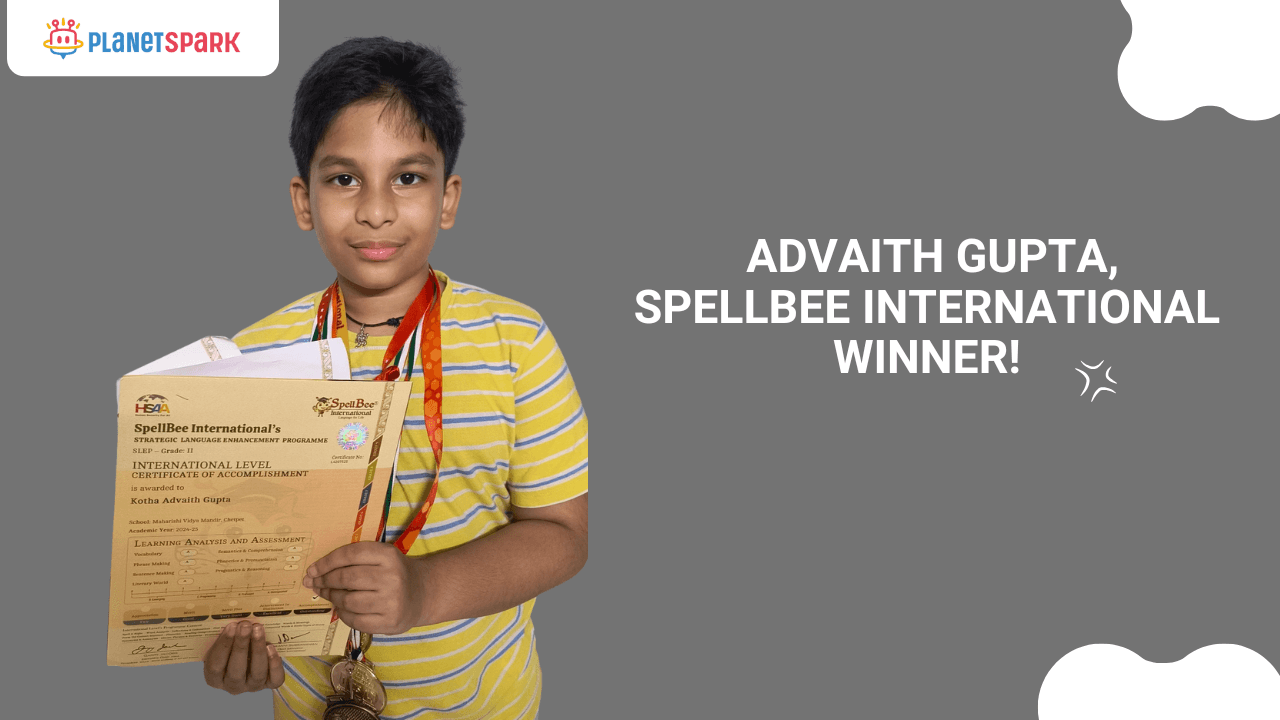
Advaith Gupta – Spelling His Way to Global Recognition!
From mastering vocabulary to shining at SpellBee International, Advaith creates remarkable achievements.
Advaith Gupta’s journey is a powerful example of how strong language foundations can lead to global success. What began as focused vocabulary building gradually transformed into confidence, clarity, and composure, skills that helped him excel on international platforms like SpellBee International.
His growth highlights the importance of structured language learning, where vocabulary, writing, and speaking work together. By understanding words deeply and using them confidently, Advaith didn’t just spell well; he communicated with assurance.
Build strong writing foundations with expert guidance.
Join now in Creative Writing to master literary composition step by step.
Literary Composition and Vocabulary Development
A strong literary composition naturally leads to better vocabulary usage. Instead of memorising words, students learn how and where to use them effectively.
When students practice literary composition:
They understand word context
They learn sentence variety
They avoid repetition
They develop a natural writing voice
Vocabulary becomes meaningful when used within structured writing. PlanetSpark integrates vocabulary development directly into literary composition lessons, helping students choose words that enhance clarity and creativity rather than complicate it.
Over time, students begin to write with precision, selecting words that fit tone, audience, and purpose. This skill improves both creative writing and academic responses.
For Readers Who Loved This Topic: Explore More
If you enjoyed understanding literary composition, you may also love exploring:
Frequently Asked Questions
Literary composition goes beyond writing sentences correctly. It focuses on how ideas are structured, connected, and expressed creatively. Students learn how to plan their thoughts, develop them logically, and present them in a way that engages the reader, whether through stories, essays, or poems.
When students learn literary composition early, they develop clarity of thought and confidence in expression. Instead of struggling with “what to write,” they understand how to organise ideas, which makes writing less stressful and more enjoyable as academic demands increase.
Literary composition supports both. In academics, it improves answers, essays, and comprehension responses. In creative writing, it enhances storytelling, descriptive writing, and originality. The skill strengthens communication across subjects.
Students don’t just learn new words—they learn where and how to use them meaningfully. Literary composition teaches context, tone, and flow, helping students choose words that make their writing clearer and more impactful.
Yes. When students learn to structure ideas in writing, they also learn to structure thoughts while speaking. This leads to clearer explanations, better storytelling, and more confident public speaking.
Success Story Spotlight
Powerful transformations from ordinary learners to confident communicators and authors.
Parents of Oviya Singh
Oviya Singh, a PlanetSpark student, spoke about ‘Soil Conservation’ in her TEDxTalk by addressing the status quo and questioning, ‘Is the world running out of food?’
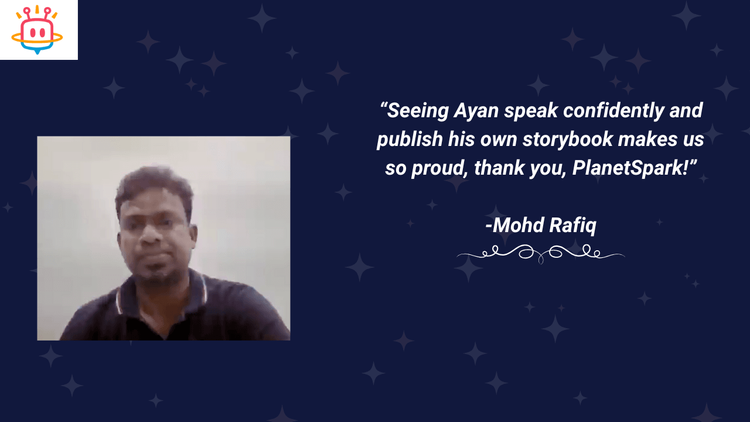
Mohd Rafiq
Thanks to PlanetSpark and his teacher’s guidance, Ayan now speaks confidently, participates actively, and has published his first storybook.
Mr. & Mrs. Bipin Patel
PlanetSpark helped my son Ahan find his voice and confidence. From stage speaking to being published in Pearls of Poetry, his growth has been remarkable.

Mrs. Sushila Thapa
PlanetSpark’s Public Speaking program has boosted Sristi’s confidence and clarity, her school performance speaks for itself.
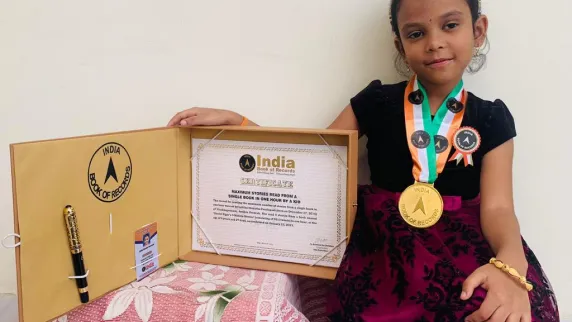
Rajiv Sharma
My daughter has transformed from a shy kid to a confident speaker in just 6 months. The personalized attention and structured curriculum made all the difference.
Download Free Worksheets
Personalized Communication Report
Record a video to get a AI generated personalized communication report for your child
Select Learner's Class