
Speech Therapy for Kids
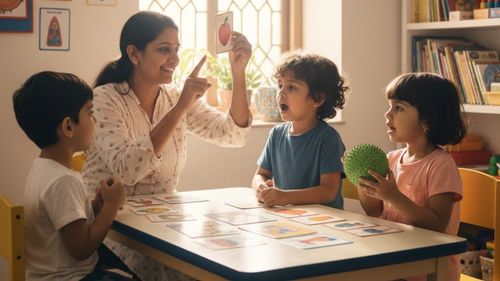

Table of Contents
- What Is Speech Therapy for Kids?
- Signs Your Child May Need Speech Therapy
- Benefits of Speech Therapy for Kids
- Effective Speech Therapy Techniques Used by Professionals
- 2. Language Intervention Activities
- Common Speech & Communication Challenges Students Face
- How Kids Can Improve Speech at Home
- Parent’s 5-Step Home Routine for Better Speech
- Format of a Speech Therapy Program
- How to Make Your Child’s Speech Improvement Stand Out
- PlanetSpark’s Advantage in Communication Skill-Building
- Turn Speech Clarity into Confidence
Helping children communicate clearly is one of the most powerful gifts a parent can give. When a child struggles with speech unclear words, stammering, late talking, mispronunciation it affects far more than just how they sound. It influences confidence, social interactions, classroom performance, emotional expression, and the ability to form healthy relationships.
Speech therapy helps children build strong, effective communication skills by improving pronunciation, vocabulary, clarity, comprehension, and expressive ability. With the right guidance, children learn to speak with confidence, communicate their thoughts easily, and feel more secure in social situations.
This guide explains everything parents need to know: early signs of speech issues, what therapy includes, techniques used by professionals, effective home exercises, and how PlanetSpark supports communication development through engaging and interactive learning.
What Is Speech Therapy for Kids?
Speech therapy focuses on helping children develop clear and effective communication. A certified speech-language pathologist (SLP) works with the child to strengthen:
• Speech sounds – correcting unclear or mispronounced words
• Fluency – managing stammering or sound repetitions
• Voice quality – improving pitch, tone, or harshness
• Language comprehension – understanding meaning, instructions, and contexts
• Expressive language – forming sentences, describing, narrating
• Social communication – taking turns, eye contact, conversation skills
Therapists use evidence-based techniques, structured exercises, play-based learning, repetition, and conversational games to help children speak confidently and correctly. Every plan is personalised because each child’s speech pattern, pace, and needs are different.

Signs Your Child May Need Speech Therapy
Parents often sense something is “off,” but aren’t sure when it becomes a concern. These indicators are reliable and backed by developmental research:
• Persistent mispronunciation of basic sounds (“tar” for “car,” “thip” for “ship”)
• Speech that sounds unclear, rushed, or difficult to understand
• Stammering, blocking, or repeating syllables
• Vocabulary that is limited for their age
• Difficulty forming sentences beyond two or three words
• Trouble following simple instructions or processing language
• Speech that strangers cannot understand by age 4
• Delayed talking compared to peers
• Difficulty recalling words or naming objects
• Avoiding speaking situations due to frustration
Speech delays are common, but ignoring them can make correction harder later. Early intervention leads to faster and more effective improvement.
Benefits of Speech Therapy for Kids
1. Improves Pronunciation & Clarity
Children learn how to form sounds correctly with their tongue, lips, and jaw, which instantly makes their speech clearer and easier to understand. This prevents common confusions in school and helps them communicate comfortably with teachers and friends.
2. Strengthens Listening & Comprehension
Speech therapy trains children to focus on tone, key words, and meaning instead of just hearing noise. This allows them to follow instructions better and understand lessons more effectively in class.
3. Boosts Communication Confidence
When a child speaks clearly, they naturally feel more confident in class discussions, presentations, and peer conversations. Confidence builds quickly once the fear of “being misunderstood” disappears.
4. Enhances Reading & Writing Skills
Speech, reading, and writing are connected. As speech clarity improves, children read with better flow and write with improved sentence structure and expression. Their overall language ability grows stronger.
5. Prevents Future Academic Challenges
Unaddressed speech issues can later turn into hesitation, low class participation, or difficulty expressing thoughts. Early speech development avoids these long-term issues and strengthens the child’s academic foundation.

Effective Speech Therapy Techniques Used by Professionals
Speech therapists rely on proven, child-friendly techniques to help children correct errors and improve clarity.
1. Articulation Therapy
Focuses on correcting specific sounds (“r,” “l,” “s,” “sh,” etc.).
Children learn how to place their tongue, move their lips, and coordinate breath for clearer pronunciation.
2. Language Intervention Activities
Builds sentence formation, vocabulary, grammar, and storytelling skills through guided play, questions, and picture-based prompts.
3. Oral Motor Exercises
Strengthens the muscles of the lips, tongue, and jaw using blowing exercises, tongue lifts, lip stretches, and chewing tasks.
4. Fluency Shaping Techniques
Helps children who stammer develop smoother, slower, more controlled speech patterns using relaxation strategies and guided repetition.
5. Auditory Training
Improves listening, sound recognition, and comprehension through sound games, minimal pairs, and controlled hearing tasks.
6. Play-Based Learning
Therapists integrate toys, pretend games, puppets, flashcards, and routines so children learn language naturally and joyfully.
PlanetSpark builds on these techniques by turning speaking practice into interactive challenges, storytelling tasks, and real communication activities that boost confidence alongside clarity.
Boost your child’s speaking skills start a free demo class now!
Common Speech & Communication Challenges Students Face
1. Mispronunciation
Children may mix similar sounds, skip certain letters, or replace one sound with another, which makes their speech unclear. Correcting these early prevents confusion and builds clarity.
2. Stuttering or Hesitation
Some students repeat sounds or feel “stuck” while beginning sentences. This hesitation often affects confidence, and gentle speech therapy exercises help them speak more smoothly.
3. Soft or Unclear Voice
Speaking too softly makes it difficult for others to hear or understand the child. Therapy helps them learn how to control volume, breathe correctly, and project their voice with confidence.
4. Limited Vocabulary
Children struggle to express themselves when their vocabulary is small. Speech sessions expand their word knowledge, helping them communicate more freely and effectively.
5. Difficulty Forming Sentences
Some children know what they want to say but can’t build proper sentences quickly. Therapy teaches them how to structure thoughts into clear, logical sentences.
6. Low Speaking Confidence
Fear of being judged or corrected often holds children back from speaking. Confidence-building activities gently ease students into speaking without pressure.
7. Social Communication Gaps
Children may struggle with greetings, eye contact, turn-taking, or polite expressions. Speech therapy nurtures these basic social skills in a safe and guided way.
How Kids Can Improve Speech at Home
Children improve fastest when therapy is supported with simple home routines. Parents often underestimate how much daily habits influence speech clarity. Here are effective, low-effort strategies that genuinely help.
1. Daily 5-Minute Sound Practice
Choose one sound (“s,” “r,” “ch,” “sh”). Make the child repeat words with that sound clearly and slowly.
2. Mirror Exercise
Children watch their lip and tongue movement to correct errors.This works especially well for “r,” “l,” and “s” sounds.
3. Read Aloud Together
Select simple storybooks and encourage slow, clear reading.Pause to correct sounds gently.
4. The Slow-Talk Rule
Tell children to slow down when stuck.Slower speech reduces stammering instantly and improves clarity.
5. Label Items Around the Room
Labels help children connect spoken words with objects. It builds vocabulary and conceptual understanding.
6. Use Digital Tools
PlanetSpark’s AI-based speech games, pronunciation drills, and practice prompts help children train independent.

Parent’s 5-Step Home Routine for Better Speech
Consistency beats intensity. A simple routine works better than long, occasional sessions.
Step 1: Start with 1–2 sounds per week
Correct those sounds fully before adding new ones.
Step 2: 10 minutes of daily conversation
Ask your child about their day. Encourage full sentences instead of yes/no replies.
Step 3: Record & Replay Method
Record your child speaking.
Play it back softly—they instantly recognise unclear areas and self-correct.
Step 4: Weekly Storytelling Practice
Use a picture and ask your child to describe it in full sentences.
This builds fluency, vocabulary, and expression.
Step 5: Celebrate every improvement
A sticker, a star, or simple appreciation boosts motivation and consistency.
Even without formal therapy, these steps produce noticeable changes. When combined with therapy, progress becomes significantly faster.
Help your child speak better - book a free demo class today!
Format of a Speech Therapy Program
1. Assessment – Understanding the Child
The therapist observes how the child speaks, listens, and responds, noting every small challenge. This step helps create a personalised plan based on the child’s unique needs.
2. Goal Setting
Clear, realistic goals are chosen—such as correcting a specific sound or improving fluency. These goals guide the child’s weekly practice and track visible improvement.
3. Articulation Training (Sound Correction)
Children learn mouth placement for difficult sounds through mirrors, models, and slow repetition. This builds correct habits that eventually become natural.
4. Language Development
Therapists introduce new words, sentence structures, and storytelling tasks. This strengthens the child’s ability to express ideas clearly and confidently.
5. Fluency Training
Exercises like slow reading, breathing control, and rhythmic speaking reduce stuttering and hesitation. Fluency grows steadily with support and practice.
6. Voice Modulation
Students learn how to adjust their tone, pitch, pauses, and energy to sound expressive. This helps them speak confidently in class and during presentations.
7. Social Speaking Practice
Children practise greetings, conversations, polite expressions, and real-life dialogue. This helps them interact comfortably with peers and adults.
8. Evaluation & Revision
Progress is reviewed regularly, and exercises are adjusted based on what the child needs next. This ensures steady, continuous improvement.
How to Make Your Child’s Speech Improvement Stand Out
1. Consistent Daily Practice
Just a few minutes of focused practice every day creates stronger habits than long, occasional sessions. Regularity helps children retain skills and improve quickly.
2. Speak Slowly and Clearly
Children tend to rush when nervous, causing unclear speech. Slow, calm speaking helps them articulate each sound correctly and builds confidence.
3. Record & Review
Hearing their own voice helps children recognise mistakes they didn’t notice while speaking. This motivates them to improve and makes progress visible.
4. Build Vocabulary Gradually
Learning a few new words daily helps children express emotions, ideas, and stories with more ease. A strong vocabulary boosts both speaking and writing skills.
5. Use Real-Life Speaking Opportunities
Whether sharing a school story or presenting homework aloud, daily speaking moments help children practise naturally. Real use speeds up real growth.
6. Focus on Expression
Encourage children to speak with emotion and natural tone instead of monotone delivery. Expression makes speech engaging and builds stage confidence.
7. Learn Through Listening
Audiobooks, podcasts, and storytelling videos help children absorb natural pronunciation and rhythm. Listening is a powerful tool for good speaking.
PlanetSpark’s Advantage in Communication Skill-Building
PlanetSpark is not a replacement for clinical speech therapy. Instead, it strengthens real-life speaking skills, confidence, and communication habits that traditional therapy often cannot fully cover.
1. One-on-One Mentorship
Kids get personalised guidance to improve clarity, tone, articulation, and expression.
2. Gamified Speech Tools
SparkBee Voice Challenges, SparkX Pronunciation Drills, and Grammar Guru tasks make practice enjoyable and consistent.
3. Storytelling & Creative Expression
Children create stories, narrate them, and receive immediate feedback, improving fluency and structure.
4. Vocabulary Building
Spark Diary helps kids learn new words and use them in meaningful sentences.
5. Public Speaking & Debate Clubs
Kids learn voice modulation, clarity, and conversation skills areas traditional therapy does not focus on.
Parents consistently report improvement not only in clarity but in personality, communication confidence, and self-expression.
Turn Speech Clarity into Confidence
Speech improvement is a steady journey. With the right guidance, consistent practice, and motivating learning experiences, children transform from hesitant speakers into confident communicators.
PlanetSpark supports this growth through interactive speaking sessions, personalised feedback, and engaging language activities that make speech improvement feel natural and enjoyable for every child.
Frequently Asked Questions
Leadership development can begin as early as preschool through simple activities like sharing, taking turns, and helping others. Every age presents appropriate opportunities for building leadership abilities.