
Mind Games for Students: Fun Ways to Boost Brainpower
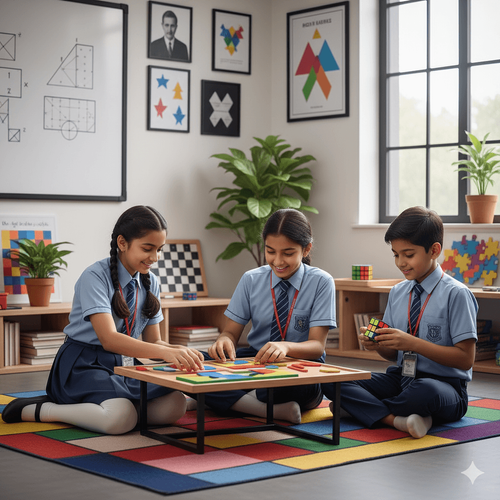

Table of Contents
- Types of Mind Games for Students
- Interesting Mind Games for Students
- Mind Games for Students in the Classroom
- Understanding Mind Games: What They Are & Why They Matter
- Why Mind Games Work Well in Classrooms
- Benefits of Mind Games for Students
- How Teachers Can Integrate Mind Games Into Daily Learning
- How Parents Can Use Mind Games at Home
- Unlock Your Child’s Personality Potential with PlanetSpark
- Empower Young Minds Through Fun and Challenging Brain Games
Mind games for students turn learning into an exciting brain adventure, where puzzles, riddles, and challenges sharpen memory, focus, and creativity. This blog explores the most engaging mind games and how they make classrooms lively while enhancing critical thinking. With PlanetSpark’s fun and interactive approach, children can enjoy these games while building confidence, problem-solving skills, and communication skills, making playtime a powerful learning experience.
Types of Mind Games for Students
Mind games for students are designed to boost cognitive skills, focus, and creativity. They cater to different age groups and learning goals, helping children think critically, solve problems, and enhance memory while keeping learning fun and engaging.
1. Logical Thinking Games
Logical thinking games strengthen reasoning and analytical skills. Puzzles like Sudoku and number games encourage pattern recognition, deduction, and problem-solving, enabling students to approach challenges methodically and make decisions based on structured thinking.
2. Memory Games
Memory games improve both short-term and long-term recall. Activities like memory card flips or spot-the-difference exercises train students to retain and retrieve information efficiently, enhancing focus, concentration, and cognitive agility in academic and daily tasks.
3. Strategy Games
Strategy games teach planning, prediction, and decision-making. Games such as chess or Connect Four challenge students to anticipate moves, evaluate outcomes, and think ahead, fostering logical reasoning, patience, and the ability to consider multiple perspectives before acting.
4. Word & Language Games
Word and language games boost vocabulary, spelling, and communication skills. Games like Scrabble or story chains engage students in creative expression, enhancing their language comprehension, critical thinking, and confidence in using words effectively in conversation and writing. Kids, who are interested in adding idioms to their daily life can click here.
5. Creative Thinking Games
Creative thinking games nurture imagination and innovation. Activities such as doodle art challenges or character creation exercises encourage students to explore new ideas, experiment with different approaches, and develop originality, problem-solving, and artistic thinking skills.
6. Observation & Concentration Games
Observation and concentration games enhance attention to detail and visual memory. Quick reaction games, Freeze Dance, or “What’s Missing?” exercises train students to notice subtle differences, maintain focus, and respond promptly, improving both academic and daily-life attentiveness.
7. Digital Mind Games
Digital mind games use apps and online tools to teach coding, logic, and reasoning. Brain training and memory apps provide interactive, adaptive challenges, making learning engaging while helping students improve critical thinking, problem-solving, and technological literacy.

Interesting Mind Games for Students
Looking for engaging mind games for students? These activities are easy to conduct in classrooms or at home and help develop memory, reasoning, creativity, and teamwork while keeping learning fun and interactive.
1. The Memory Chain Game
Students sit in a circle. One starts with a word, and each student repeats the chain, adding a new word. This strengthens memory, sequencing skills, and attention, encouraging students to focus carefully and recall information accurately.
2. 20 Questions
One student thinks of a person or object, while others ask yes/no questions to guess it. This game develops deductive reasoning, questioning techniques, and vocabulary, promoting logical thinking and critical problem-solving skills in a fun way.
3. Spot the Change
A student steps outside while the group alters something in the classroom. When the student returns, they must spot the change. This game hones observation, attention to detail, and concentration, enhancing visual memory and focus.
4. Build the Story
Each student adds a sentence to continue a story, aiming to create a coherent, imaginative narrative. This exercise fosters creativity, communication, and imagination, while helping students practice storytelling and collaborative thinking.
5. Math Bingo
The teacher calls out math questions, and students mark answers on their Bingo sheets. This game develops mental calculation, quick thinking, and focus, making math practice exciting and interactive while improving numerical skills.
6. The Silent Line-Up
Students must line up by height, age, or birthday without speaking. This activity enhances non-verbal communication, teamwork, and logical reasoning, encouraging students to observe, coordinate silently, and solve problems collaboratively.
7. Tangram Challenges
Students use geometric shapes to form specific objects or designs. Tangram challenges improve spatial intelligence, creativity, and problem-solving, encouraging students to visualize, plan, and manipulate shapes accurately.
8. Match-the-Pattern
The teacher shows a pattern for a few seconds, and students recreate it from memory. This game strengthens short-term memory, attention, and visual processing, helping students remember details and replicate patterns accurately.
9. Word Relay
One student writes a word, and the next quickly writes a related word within seconds. This exercise enhances vocabulary, quick recall, and cognitive agility, helping students think fast while practicing language connections and word association.
Introduce your child to fun and challenging mind games with PlanetSpark to enhance focus, memory, and creativity.
Give them a head start—Start a Free Trial and Watch Them Shine!
Mind Games for Students in the Classroom
Classrooms are perfect for mind games, turning lessons into fun, interactive learning experiences. These activities engage students, improve cognitive skills, and promote teamwork, creativity, and critical thinking while keeping the learning environment lively and motivating.
1. Riddle Challenges
Teachers present riddles, and students race to solve them individually or in teams. This activity enhances logical thinking, problem-solving, and reasoning skills while encouraging students to think creatively under time pressure and enjoy friendly competition.
2. Classroom Trivia
Questions on subjects such as science, math, or history are presented in a game format. Classroom trivia boosts knowledge retention, active recall, and subject comprehension while making learning interactive, fun, and memorable for students.
3. Group Puzzles
Teams work together to solve large puzzles or brainteasers. Group puzzles promote collaboration, communication, teamwork, and problem-solving skills, helping students share ideas, plan strategies, and approach challenges collectively.
4. Quick Decision Games
Students are given scenarios and must choose solutions quickly. This game develops critical thinking, decision-making, and analytical skills, training students to evaluate options under pressure and act confidently with limited information.
5. Thematic Role-Play Games
Students act out characters or scenarios related to lessons. Role-play games enhance empathy, creativity, public speaking, and social skills while encouraging students to explore perspectives and express themselves confidently in front of peers.
6. The “One-Minute Challenge”
Students complete quick tasks like listing words, spotting differences, or solving puzzles in 60 seconds. This activity builds focus, speed, efficiency, and mental agility, encouraging students to think quickly while maintaining accuracy.
7. Mystery Box Game
Students guess the item hidden inside a covered box using clues provided. This fun game strengthens inference skills, imagination, and observation while encouraging students to reason logically and think creatively about possibilities.
Understanding Mind Games: What They Are & Why They Matter
Mind games are activities that stimulate certain cognitive functions, which are memory, logic, creativity, reasoning, and language skills. They include puzzles, riddles, strategy games, concentration exercises, and problem-solving challenges. Students can click this link to know about valuable skills that can be learn in festivals.
These games are not just random brain exercises; they are carefully structured to help students:
- Think faster and more critically
- Strengthen memory retention
- Build spatial awareness
- Improve focus and discipline
- Develop emotional intelligence
- Learn teamwork and communication
For teachers, mind games make learning interactive and reduce classroom monotony. For parents, they create opportunities for enriching screen-free time. For students, they offer fun, competition, and instant gratification through problem-solving.
Transform study time into exciting problem-solving adventures with PlanetSpark’s gamified activities.
Engage your child in hands-on learning—Claim Your Free Trial to Begin the Journey!
Why Mind Games Work Well in Classrooms
Mind games for students in the classroom work because they make learning active and participatory. Instead of passive listening, students engage with concepts physically, verbally, and mentally.
Teachers prefer them because:
- They are low-prep and easy to conduct.
- They promote peer learning and student-led problem-solving.
- They make difficult subjects simpler through gamified techniques.
- They help teachers identify strengths and weaknesses.
Mind games remove fear from learning and turn concepts into enjoyable challenges.
Benefits of Mind Games for Students
Mind games stimulate different parts of the brain and support holistic growth. Here’s how:
- Mind games improve reasoning, decision-making, and memory. They activate the brain’s problem-solving center and increase neural connections.
- Games like memory match, pattern recognition, or observation activities train students to pay attention for longer durations.
- Creative puzzles and storytelling games push students to think outside the box, improving imaginative and innovative thinking.
- Many mind games require teamwork, teaching students cooperation, conflict resolution, and leadership.
- Games involving communication, guessing emotions, or role-play help students understand feelings, build empathy, and manage stress better.
- Mind games serve as mental refreshers, breaking the academic routine and supporting emotional well-being.
Help your child develop analytical thinking, decision-making, and reasoning through interactive mind games at PlanetSpark.
How Teachers Can Integrate Mind Games Into Daily Learning
Mind games do not need special materials that can be seamlessly added to school routines.
Practical Tips for Teachers:
- Use mind games as warm-ups to activate the brain.
- Conduct short brain breaks during long lessons.
- Use strategy games to introduce new concepts.
- Encourage teamwork through group activities.
- Use reward-based games for classroom motivation.
Games can also be aligned with subjects:
- Math: number puzzles, Sudoku, logic grids
- English: word ladders, storytelling games
- Science: hypothesis challenges, experiment guessing
- Social Studies: map puzzles, history trivia
Mind games make learning unforgettable because they involve curiosity, excitement, and discovery.
How Parents Can Use Mind Games at Home
Mind games at home are great for bonding and skill development.
Try these activities at home:
- Flashcards
- Lego building
- Tangrams
- Online brain puzzles
- Riddles and question games
- Memory matching
- Strategy board games
Just 10–15 minutes daily can make a huge difference in a child’s confidence and brain development.
Unlock Your Child’s Personality Potential with PlanetSpark
PlanetSpark goes beyond academics to nurture confident, articulate, and socially adept children. Through a holistic, activity-based learning approach, kids build self-confidence, leadership skills, emotional intelligence, and effective communication.
With PlanetSpark, personality development becomes engaging, measurable, and fun:
- 1:1 Personalised Mentorship: Certified trainers guide each child in public speaking, storytelling, and communication skills.
- Holistic Curriculum: Covers self-introduction, goal setting, peer interaction, critical thinking, and social etiquette.
- Interactive Learning Tools: SparkX, Spark Diary, and SparkBee provide AI-driven feedback and gamified practice.
- Leadership & Confidence Training: Mock interviews, real-life scenario simulations, and public introductions strengthen self-presentation.
- Social-Emotional Learning (SEL): Activities designed on the CASEL framework foster empathy, teamwork, and emotional awareness.
- Regular Parent Consultations: Track growth through confidence meters, progress reports, and personalised guidance.
PlanetSpark empowers children to shine academically and socially, shaping leaders of tomorrow.
Empower Young Minds Through Fun and Challenging Brain Games
Mind games for students are powerful tools that enrich mental, emotional, and academic skills. From improving focus and memory to enhancing creativity and teamwork, these games support overall development in fun and meaningful ways.
Teachers can integrate mind games for students in the classroom to create engaging learning environments, while parents can use interesting mind games for students to make home learning enjoyable.
Mind games not only strengthen brainpower but also shape confident, curious, and thoughtful learners. When used consistently, they transform the learning experience that turns challenges into exciting opportunities.
Frequently Asked Questions
Mind games for students are activities like puzzles, riddles, and strategy challenges that boost memory, focus, creativity, and problem-solving skills while making learning interactive and fun for children of all ages.
Mind games for students in the classroom enhance engagement, critical thinking, and teamwork. They turn lessons into interactive sessions, helping students retain concepts better and participate actively in discussions.
PlanetSpark focuses on holistic growth, integrating public speaking, storytelling, leadership, and emotional intelligence. Interactive sessions, progress tracking, and clubs make skill development enjoyable and measurable for every child.
Yes, mind games like memory chains, pattern recognition, and logic puzzles strengthen attention span and recall ability, helping students concentrate better during studies and retain information longer.
Interesting mind games for students include 20 Questions, storytelling challenges, spot-the-difference, tangram puzzles, word relays, and math bingo, which make learning fun while improving cognitive skills.
PlanetSpark combines 1:1 mentorship, gamified activities like SparkBee, and AI tools like SparkX to help children enhance communication, critical thinking, creativity, and confidence through structured, engaging learning experiences.