
ATS Optimization Master Checklist

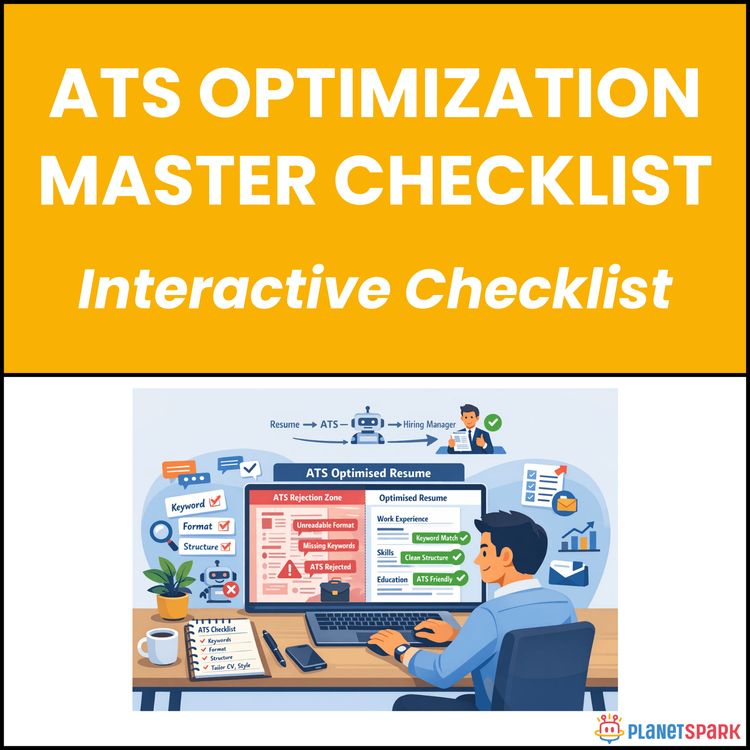
ATS Optimization Master Checklist
ATS Resume Optimisation Guide: The Complete Checklist to Get Past Hiring Bots and Land Interviews
Many professionals believe their resume is not getting responses because they lack experience, the market is too competitive, or recruiters are not reviewing their applications.
In reality, the problem often appears much earlier in the hiring process.
Today, most companies use Applicant Tracking Systems (ATS) to scan and filter resumes before a human recruiter ever sees them. These systems automatically evaluate applications based on structure, keywords, and formatting. If your resume is not written in a way the system can read and interpret correctly, it may never reach the hiring manager at all.
In fact, more than 75% of resumes are rejected by ATS systems before a recruiter reviews them. :contentReference[oaicite:0]{index=0}
This means highly qualified professionals frequently miss opportunities simply because their resume is not optimized for modern hiring technology.
The ATS Optimisation Master Checklist by PlanetSpark was created to solve this exact problem. It provides a structured, step-by-step system to help professionals format, structure, and tailor their resumes so they pass automated screening and reach real hiring managers.
This guide explains what the checklist contains, how it works, and how you can use it to dramatically improve your chances of getting interviews.
Who Is This Resource For?
This resource is designed specifically for professionals navigating modern hiring systems, including:
• Job seekers applying through online job portals
• Career switchers entering a new industry or role
• Early to mid-career professionals with 0–15 years of experience
• Consultants, managers, and specialists looking for new opportunities
• Professionals who are sending applications but receiving very few interview callbacks
It is especially useful for people who suspect their resume may not be passing ATS filters despite having strong experience.
If you want your resume to be discovered, ranked, and shortlisted by modern hiring systems, this checklist provides the practical framework to make that happen.
What Does This Resource Contain?
The ATS Optimisation Master Checklist is structured as a practical, modular guide that professionals can use while preparing job applications.
Instead of theory, the resource focuses on actionable checklists, frameworks, and templates that help you optimize each part of your resume.
The key sections include:
Foundation Layer: File Format and Resume Structure
The checklist begins with the technical foundation that determines whether an ATS system can even read your resume.
You will learn how to:
• Choose ATS-friendly file formats
• Avoid formatting mistakes that break ATS parsing
• Structure your resume using single-column layouts
• Use standard headings such as Work Experience, Skills, and Education
• Avoid design elements like text boxes, tables, icons, and headers that ATS systems often skip
These small formatting decisions can determine whether your resume is readable by the system.
Keyword Strategy Framework
One of the most critical aspects of ATS optimization is using the correct keywords.
The checklist explains how to:
• Extract keywords from job descriptions
• Identify required skills, tools, and certifications
• Match your experience with job-specific language
• Achieve a 70–80% keyword alignment with the job description
This section also explains where keywords should appear in your resume, including the professional summary, work experience, and skills sections.
Professional Summary Template
Your professional summary is the first section both ATS systems and recruiters evaluate.
The resource provides a fill-in framework that helps professionals quickly create a strong summary that includes:
• The target job title
• Years of relevant experience
• Core competencies from the job description
• A clear value proposition
The goal is to transform generic summaries into targeted positioning statements that signal immediate relevance.
Work Experience Optimization
The Work Experience section carries the most weight in ATS scoring because it shows evidence of real skills.
The checklist shows how to:
• Write achievement-focused bullet points
• Use strong action verbs
• Include keywords naturally in context
• Add measurable results and quantified outcomes
Instead of vague descriptions, professionals learn how to communicate impact in ways that both ATS systems and hiring managers value.
Skills Section Structure
Many resumes include a skills section, but very few structure it correctly.
This guide shows how to organize skills into clear categories such as:
• Technical Skills
• Domain Knowledge
• Tools and Software
• Languages
• Certifications
This structured format helps ATS systems scan and match skills more accurately while also making it easier for recruiters to evaluate your capabilities.
Education, Certifications, and Additional Sections
The resource also explains how to structure supporting sections that ATS systems often analyze when filtering candidates.
You will learn how to present:
• Degrees and academic qualifications
• Professional certifications
• Relevant coursework or training
• Volunteer work or projects
• Industry-related publications or speaking engagements
These sections can be particularly valuable for career switchers who need to demonstrate domain knowledge.
The Tailoring Framework for Every Application
One of the most important lessons in the checklist is that submitting the same resume to every job rarely works.
Instead, the resource introduces a simple system:
Master CV → Analyse Job Description → Create Targeted Resume
Professionals learn how to:
• Maintain a comprehensive master resume
• Extract role-specific experience for each application
• Align keywords with the job description
• Adjust summary, skills, and key bullet points
Once this system is in place, customizing applications becomes much faster and more effective.
Summary of the Resource
The ATS Optimisation Master Checklist is essentially a complete system for modern job applications.
It helps professionals:
• Format their resume so ATS systems can read it correctly
• Use keywords strategically to match job descriptions
• Structure work experience with measurable impact
• Organize skills in ATS-friendly formats
• Tailor each application efficiently
Instead of guessing what recruiters want, professionals can use this framework to align their resume with how hiring systems actually work.
How Will This Resource Be Useful?
The practical value of this resource is significant for professionals navigating competitive hiring markets.
Using the checklist can help you:
Improve resume visibility
An ATS-optimized resume ensures your application is properly parsed and ranked by automated systems.
Increase interview callbacks
When your resume aligns with job descriptions and includes the right keywords, your chances of passing ATS filters increase dramatically.
Communicate impact more clearly
The checklist encourages professionals to focus on measurable achievements rather than vague responsibilities.
Save time during job searches
By creating a Master CV and using a structured tailoring process, professionals can customize applications quickly without rewriting their resume from scratch.
Reduce guesswork
Instead of relying on outdated advice or generic templates, the resource provides clear, proven steps for improving ATS performance.
How Should You Use This Resource?
To get the most value from the checklist, professionals should approach it in phases.
Step 1: Read the checklist from start to finish
The first step is understanding how ATS systems evaluate resumes and how each section contributes to your overall score.
Step 2: Rebuild your resume foundation
Start with the structural elements such as file format, layout, and section headings. These technical details determine whether your resume is readable by ATS systems.
Step 3: Build a Master Resume
Create a comprehensive document containing all roles, achievements, certifications, and skills. This becomes the source for future applications.
Step 4: Develop a keyword strategy
Analyze job descriptions for roles you are targeting and identify the most frequently used skills and terminology.
Step 5: Tailor your resume for each application
Use your Master Resume to create targeted versions aligned with the specific job description.
Step 6: Run an ATS audit before submitting
Tools such as Jobscan or Resume Worded can help evaluate keyword match scores before applying.
Following this structured process turns resume writing into a repeatable system rather than a trial-and-error activity.
Action Steps
If you want to start improving your resume immediately, follow these simple steps:
1. Convert your resume into a clean, ATS-friendly format.
2. Create a master version of your resume containing all achievements and skills.
3. Analyze job descriptions for the roles you want to target.
4. Rewrite your professional summary using keywords from the job posting.
5. Update your work experience bullets with measurable results.
6. Organize your skills into structured categories.
7. Tailor each resume before submitting applications.
8. Run your resume through an ATS scoring tool before applying.
These small adjustments can significantly increase your chances of getting shortlisted.
Modern hiring systems reward professionals who understand how applications are evaluated. By using the ATS Optimisation Master Checklist, you are not just improving your resume — you are building a smarter job search strategy.
Career success today requires more than experience. It requires the ability to communicate that experience clearly to both machines and humans.
When your resume is optimized, structured, and tailored correctly, opportunities that once felt invisible become far more accessible.