
Building a Narrative After Multiple Short Roles

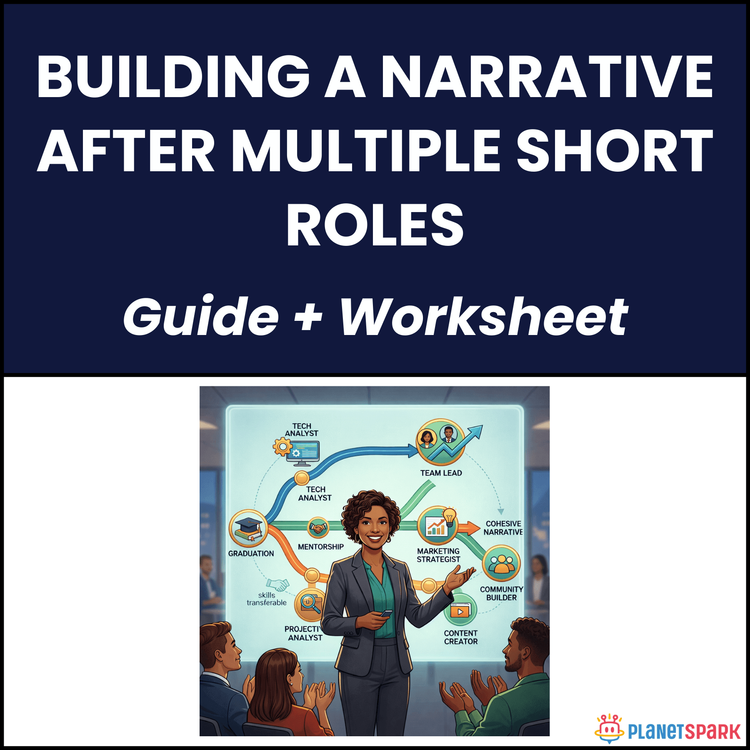
Building a Narrative After Multiple Short Roles
How to Explain Multiple Short Jobs on Your Resume to Build a Confident Career Narrative
Many professionals today don’t follow a perfectly linear career path. You may have changed roles frequently, worked in startups that pivoted, taken contract assignments, or explored different opportunities to grow your skills. Yet when it comes time to update your LinkedIn profile or sit in an interview, a familiar anxiety appears.
How do I explain multiple short roles without sounding unreliable?
The truth is that short tenures themselves are rarely the real problem. What hiring managers struggle with is confusion. When a resume looks fragmented and there is no clear story behind it, they begin to make assumptions about instability, lack of direction, or poor judgment.
But with the right narrative, the same career history can communicate something entirely different: adaptability, learning velocity, breadth of experience, and intentional career growth.
The resource “Building Your Narrative After Multiple Short Roles” is designed to help professionals solve exactly this problem. It provides a structured framework and practical worksheets to help you transform a scattered job history into a compelling professional story that works across interviews, resumes, and networking conversations.
Who Is This Resource For?
This guide is especially valuable for professionals who find themselves in situations like these:
• Early or mid-career professionals with multiple short roles on their resume
• Professionals who moved between startups, contract roles, or project-based work
• Career switchers who experimented across industries or functions
• Job seekers preparing for interviews and struggling with the “Tell me about yourself” question
• Professionals updating their LinkedIn profile or resume after a complex career journey
If your career path has been non-linear, exploratory, or shaped by external events like company pivots, layoffs, or contract work, this resource will help you confidently explain your story instead of apologizing for it.
What Does This Resource Contain?
This guide is not just theory. It combines structured thinking with actionable worksheets so you can actively build your narrative as you move through it.
Inside the resource, you will find:
A Five-Step Narrative Framework
The guide introduces a structured five-step model designed to help you build a coherent career story:
Audit Roles → Find the Thread → Frame Transitions → Build Story Arc → Deploy Across Contexts
Each step builds on the previous one and helps you transform raw career history into a professional narrative you can confidently share.
Role Audit Worksheet
The first exercise helps you document each of your roles clearly by capturing:
• Company, role, and duration
• Key outputs and achievements
• Skills gained
• Honest reasons for leaving
This step helps you uncover valuable experiences that are often overlooked when roles are short.
Thread Finder Exercise
One of the most powerful parts of the guide is identifying your “career thread.” This involves discovering the consistent themes that run across your roles, such as:
• Recurring skills
• Types of problems you repeatedly solve
• Values that guide your career decisions
This thread becomes the foundation of your narrative.
Transition Framing Templates
Many professionals struggle to explain why they left roles quickly. The guide provides a three-part framework to frame each transition clearly:
• Context – what changed or triggered the move
• Learning – what you gained from the experience
• Forward direction – how it shaped your next step
This structure helps you communicate transitions without sounding defensive.
Story Arc Builder
Once your thread and transitions are clear, the guide helps you build a full career story using a simple structure:
Origin → Evolution → Direction
This story arc becomes the foundation for interviews, networking introductions, and professional profiles.
Deployment Templates
Finally, the guide provides templates to help you adapt your narrative across different professional contexts, including:
• LinkedIn About section
• Resume summary
• Interview answers
• Cover letters
• Networking introductions
Instead of rewriting your story every time, you learn how to adapt it effectively.
Summary of the Resource
At its core, this guide helps professionals shift from explaining their past to owning it.
Rather than seeing multiple short roles as a weakness, the framework helps you:
• Extract meaningful insights from every role
• Identify the consistent thread that connects your experiences
• Explain career transitions clearly and confidently
• Build a concise professional story that highlights growth and direction
• Adapt that story for resumes, interviews, and networking situations
By the end of the resource, you don’t just understand your career better — you have the actual language needed to communicate it.
How Will This Resource Be Useful?
Professionals often underestimate how much clarity improves their career outcomes.
When your narrative is unclear, recruiters fill the gaps with assumptions. When your narrative is strong, the same experiences become evidence of capability and growth.
Using this framework helps you:
Build Confidence in Interviews
Instead of hesitating when asked about your career path, you will have clear explanations ready.
Improve Your LinkedIn and Resume
A well-structured narrative makes your profile easier to understand and more compelling for recruiters.
Turn Career Complexity Into an Advantage
Multiple roles across industries, teams, or environments can become proof of versatility and problem-solving ability.
Communicate Professional Direction Clearly
Hiring managers want to know where you are heading. This framework helps you articulate that direction.
Prepare for Networking Conversations
When someone asks what you do or what you are looking for, you will be able to answer with clarity and impact.
How Should You Use This Resource?
The guide is designed to be both a reading resource and an active worksheet. To get the best results, approach it as a short structured exercise rather than passive reading.
Step 1: Read the Narrative Framework
Start by understanding the five-step narrative model. This gives you the big-picture structure before you start writing anything.
Step 2: Complete the Worksheets
Work through the exercises that help you audit your roles, identify patterns, and capture your key career insights.
Step 3: Build Your Story Arc
Use your thread and transition explanations to construct a clear professional story.
Step 4: Adapt the Narrative Across Contexts
Apply your story to LinkedIn, your resume summary, interview answers, and networking introductions.
Step 5: Revisit and Refine
Your career narrative evolves over time. Revisit the guide whenever you change roles or prepare for new opportunities.
Action Steps
If you want to turn this framework into real results, start with these simple actions:
1. Block 45–60 minutes to complete the Role Audit and identify recurring skills or themes.
2. Write transition explanations for your last three or four job changes using the Context–Learning–Forward structure.
3. Draft your Origin–Evolution–Direction story arc in under 200 words.
4. Update your LinkedIn About section and resume summary using the narrative you created.
5. Practice delivering your story out loud so it sounds natural in interviews and networking conversations.
The professionals who benefit most from this framework are not the ones who read it once. They are the ones who actively complete the exercises and apply the outputs immediately.
Careers today rarely follow a straight line. Roles change, industries evolve, and professionals often grow through exploration rather than perfect planning. What matters most is not whether your path was linear, but whether you can explain it clearly.
When you understand the patterns in your experience, frame your transitions confidently, and communicate where you are going next, your career story becomes a powerful professional asset.
This guide gives you the tools to create that clarity. Once you apply the framework, your resume stops looking like a list of disconnected jobs and starts sounding like a purposeful journey.