
Career Pivot Readiness Checklist

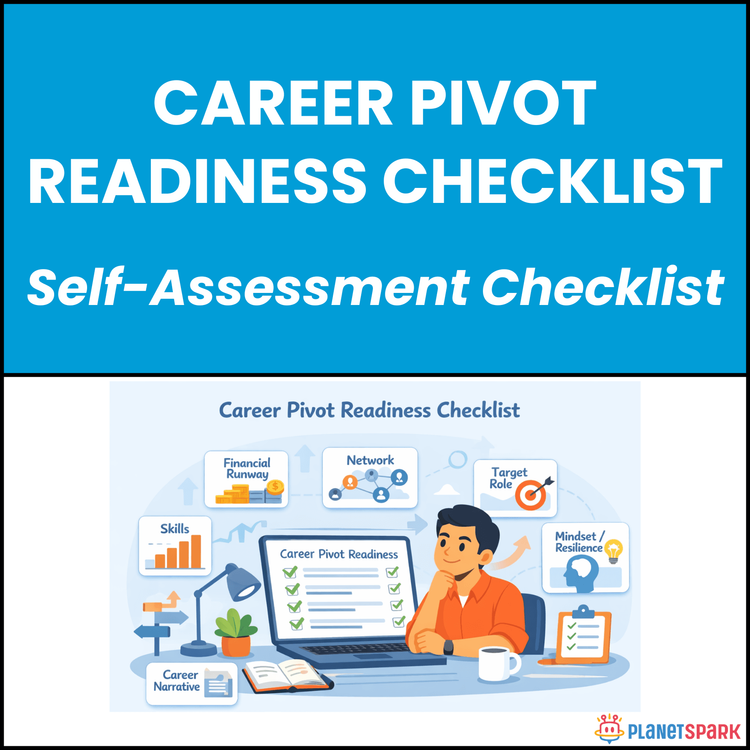
Career Pivot Readiness Checklist
Career Pivot Readiness Checklist: A Practical Guide to Preparing for a Successful Career Transition
Many professionals reach a point in their careers where they begin to question whether their current path truly reflects their interests, values, or long-term goals. Some feel drawn toward a new industry. Others want to shift roles, explore a different function, or pursue work that feels more meaningful and aligned with their strengths.
Yet despite this desire for change, most career pivots never actually happen. Professionals hesitate, delay, or abandon the idea altogether — not because they lack ability or ambition, but because the transition feels overwhelming and uncertain.
A career pivot is rarely just about applying for a new job. It involves navigating multiple dimensions simultaneously: understanding where you want to go, identifying skill gaps, building the right network, preparing financially, and developing the resilience to manage uncertainty along the way.
The Career Pivot Readiness Checklist from PlanetSpark was created to help professionals approach this transition with clarity and structure. Instead of relying on guesswork, this resource provides a practical self-assessment framework that allows you to evaluate your readiness across the critical areas that determine whether a career pivot succeeds or stalls.
Who Is This Resource For?
This resource is designed for working professionals who are considering a meaningful change in their career direction and want a structured way to evaluate whether they are truly prepared.
It is particularly valuable for:
- Early-career professionals exploring a new industry or role direction
- Mid-career managers considering a sector or functional transition
- Consultants or specialists seeking to move into product, strategy, or leadership roles
- Professionals feeling stuck or misaligned in their current career path
- Individuals preparing for a structured career change within the next 6–12 months
Whether you are just beginning to explore a potential pivot or actively preparing for one, this checklist helps bring clarity and focus to the process.
What Does This Resource Contain?
The Career Pivot Readiness Checklist is structured as a comprehensive self-assessment toolkit that walks professionals through the key elements required for a successful transition.
Inside the resource, you will find several practical frameworks and exercises designed to evaluate and strengthen your readiness.
The Six Dimensions of Career Pivot Readiness
The central framework of the resource identifies six critical dimensions that determine whether a career pivot is likely to succeed:
- Identity Clarity – Defining your target role, sector, and professional direction
- Skill Readiness – Mapping transferable skills and identifying learning gaps
- Financial Runway – Evaluating savings, expenses, and income bridges during the transition
- Network Activation – Building meaningful relationships within your target field
- Narrative Positioning – Crafting a clear and compelling career transition story
- Emotional Resilience – Developing systems to manage uncertainty, rejection, and motivation
Each dimension includes detailed checklists and reflection prompts to help you evaluate your current position honestly.
Self-Assessment Checklists
For every readiness dimension, the resource provides structured checklists that allow you to score your current level of preparation and identify gaps that require attention.
These checklists encourage professionals to examine practical questions such as:
- Do you clearly understand your target role?
- Have you mapped the skills required for that role?
- Do you have sufficient financial runway to support a transition?
- Are you actively building relationships in the new field?
By answering these questions systematically, readers gain a clearer understanding of where they stand.
Skill Gap Mapping Worksheet
One section includes a worksheet that helps you compare your current capabilities against the requirements of your desired role.
This exercise helps you:
- Identify transferable strengths
- Highlight critical skill gaps
- Prioritize learning goals
- Create a structured upskilling plan
This process ensures that your pivot strategy is built on real market requirements rather than assumptions.
Network Activation Strategy
The resource also highlights the importance of networking during a career transition. Research consistently shows that a large percentage of jobs are filled through professional relationships rather than online applications.
To help readers build those relationships effectively, the checklist introduces a structured networking approach that includes:
- Mapping your existing professional network
- Conducting informational interviews
- Engaging with industry conversations
- Building credibility within your target community
This structured approach turns networking into a deliberate strategy rather than a random activity.
Narrative Positioning Framework
Another key section focuses on crafting your career pivot story.
The resource introduces a three-part narrative structure that helps professionals explain their transition clearly:
1. Foundation – The skills and experiences built in your current career
2. Catalyst – The reason you are moving toward a new direction
3. Commitment – Evidence showing that you are actively preparing for this shift
This framework ensures that hiring managers understand your transition as an intentional evolution rather than an uncertain experiment.
Master Readiness Scorecard
One of the most powerful tools in the resource is the Master Readiness Scorecard.
This scoring system allows readers to evaluate themselves across all six pivot dimensions and assign a readiness score from 1 to 5 for each area.
The total score then helps readers understand their stage of readiness:
- Early Stage – Still exploring options and clarifying direction
- Building Momentum – Foundations in place but gaps remain
- Launch Ready – Prepared to begin an active job search
This scorecard transforms career planning into a structured decision-making process.
90-Day Career Pivot Action Plan
Finally, the resource includes a practical 90-day action plan template that helps professionals translate their readiness insights into real progress.
The plan is divided into three phases:
Days 1–30: Build the foundation
Days 31–60: Develop skills and strengthen positioning
Days 61–90: Activate your network and begin applying
This structured timeline helps readers focus on the most important priorities rather than attempting to do everything at once.
Summary of the Resource
The Career Pivot Readiness Checklist is a structured decision-making tool designed to help professionals evaluate whether they are truly prepared for a career transition.
Instead of encouraging impulsive changes, it guides readers through a thoughtful self-assessment across six critical dimensions:
- Career direction and identity
- Skills and learning gaps
- Financial stability
- Professional network strength
- Personal narrative and positioning
- Emotional readiness for uncertainty
By completing the checklists and exercises inside the resource, professionals gain a clear picture of their readiness level and a practical roadmap for moving forward.
How Will This Resource Be Useful?
Career transitions often fail not because professionals lack talent, but because they underestimate the complexity involved.
This resource helps readers avoid that mistake by providing a structured framework for evaluating every aspect of their pivot.
Readers benefit from the resource in several ways:
Clarity in Career Direction
Many professionals struggle because they are unsure what they truly want next. The identity clarity exercises help define a specific target role and industry.
Better Decision Making
Instead of making emotional or reactive career moves, readers learn to assess their readiness based on objective factors such as skills, finances, and networks.
Focused Skill Development
The skill readiness framework helps professionals prioritize the most valuable skills to develop for their target role.
Stronger Professional Positioning
The narrative framework ensures that readers can confidently explain their transition to hiring managers, recruiters, and professional contacts.
Reduced Risk During the Transition
By evaluating financial runway and emotional resilience, the checklist helps professionals prepare for the realities of a career pivot rather than being caught off guard.
Ultimately, the resource turns an uncertain transition into a structured and strategic process.
How Should You Use This Resource?
To get the most value from the Career Pivot Readiness Checklist, it should be used as an active working document rather than a resource that is simply read once.
Step 1: Read Through the Entire Resource
Start by reading the full checklist to understand the six dimensions of pivot readiness and the overall framework.
Step 2: Complete the Self-Assessment Checklists
Work through each dimension honestly and identify where you currently stand. Avoid the temptation to overestimate your readiness.
Step 3: Calculate Your Readiness Score
Use the scorecard to determine your overall readiness level and identify which areas need the most attention.
Step 4: Identify Your Two Biggest Gaps
Most professionals do not need to improve everything at once. Focus on the two dimensions where your readiness is weakest.
Step 5: Build a 90-Day Preparation Plan
Use the action plan template to create specific goals and milestones that will move you toward launch readiness.
Step 6: Revisit and Reassess
Career pivots evolve over time. Revisit the checklist periodically to measure your progress and adjust your strategy.
Action Steps
If you are considering a career pivot, here are a few immediate actions you can take after reviewing this resource:
1. Define your target role clearly. Avoid vague goals and identify specific job titles or industries.
2. Analyze job descriptions to identify the skills required in your desired field.
3. Begin mapping your transferable skills and learning gaps.
4. Reach out to professionals working in your target industry for informational conversations.
5. Calculate your financial runway and plan how you will sustain yourself during the transition.
6. Write a short narrative explaining why you are making this pivot and what value you bring to the new field.
7. Create a simple 90-day plan focused on closing your most critical readiness gaps.
These steps will help turn a vague career ambition into a structured transition plan.
Career growth rarely follows a perfectly straight path. Many of the most fulfilling careers are built through thoughtful transitions, exploration, and reinvention. What separates successful career pivoters from those who remain stuck is not courage alone — it is preparation.
The Career Pivot Readiness Checklist provides the structure needed to approach a transition with clarity, honesty, and strategy. By evaluating your readiness across skills, finances, networks, narrative, and mindset, you can move toward your next chapter with confidence rather than uncertainty.
If you are considering a career change, the most powerful step you can take is to prepare deliberately. The more intentional your preparation, the smoother your transition will be — and the stronger your long-term career trajectory will become.