
Creating an Impact-Driven Resume with Quantified Results

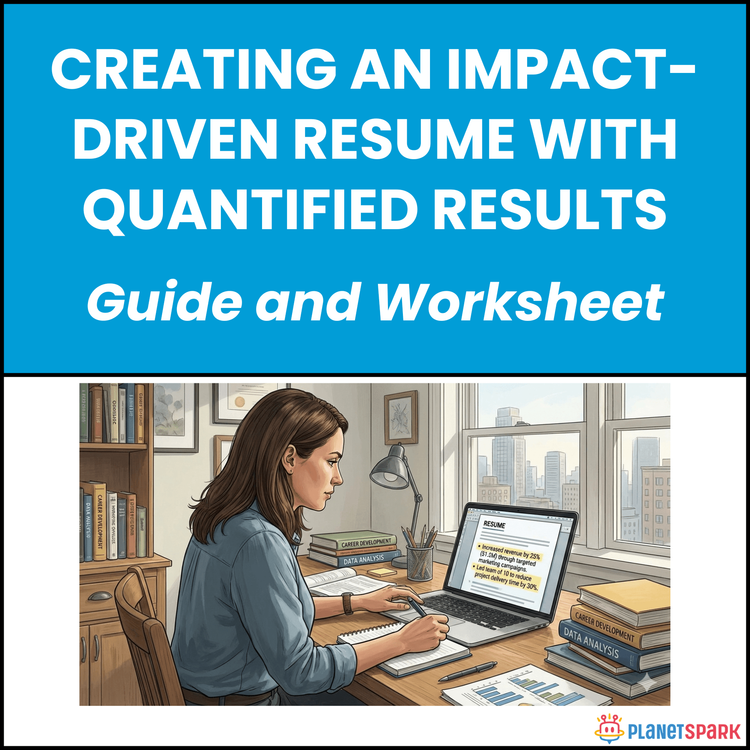
Creating an Impact-Driven Resume with Quantified Results
How to Create an Impact-Driven Resume with Quantified Results
In today’s competitive job market, having a standout resume can make all the difference. Hiring managers are overwhelmed with resumes and often spend just 6-8 seconds scanning each one. In this short span, it’s crucial that your resume makes an immediate impact. One of the best ways to ensure this is by focusing on quantified results—concrete numbers and metrics that show the real value you’ve delivered. Here's how you can create an impact-driven resume that grabs attention and clearly demonstrates your value.
Why Your Resume Needs Quantified Results?
It’s not enough to simply list your job duties on your resume. Hiring managers want to know what you’ve accomplished. Generic statements like "managed a team" or "improved processes" don’t provide enough information to show how you made a difference.
By quantifying your results—using numbers, percentages, and specific metrics—you can demonstrate your impact. These quantifiable achievements separate you from the competition and make it clear that you’ve delivered real value.
What You’ll Gain from This Guide?
Framework to Identify Achievements: Learn how to extract impactful achievements from your career.
Templates for Crafting Impact Statements: Ready-to-use templates that will help you convert job duties into powerful, result-oriented statements.
Action Worksheets: Worksheets you can use immediately to start building your resume.
How to Use This Guide?
Start by reading the entire guide for a comprehensive understanding.
Jump to specific sections as needed, depending on where you are in the resume writing process.
Complete the worksheets to build your impact-driven content.
Step 1: Conduct Your Achievement Audit
The first step in creating an impact-driven resume is to conduct an achievement audit. This means reviewing your past roles and identifying the measurable outcomes you’ve delivered. Set aside 60-90 minutes to go through your past 2-3 roles and gather data that can support your achievements.
Look at your performance reviews, project documentation, and emails where you’ve received feedback. It’s important to look beyond your job description and focus on moments when you solved problems, improved processes, or created value.
Focus on these key areas:
Revenue impact: Sales generated, clients won, contracts closed.
Cost savings: Budget optimizations, process improvements.
Time savings: Streamlined workflows, automation.
Quality improvements: Higher customer satisfaction, reduced errors.
Example:
Before (Responsibility-Focused): "Managed customer service team."
After (Achievement-Focused): "Improved customer satisfaction scores from 78% to 94% by revamping the customer service process and reducing average response time by 40%."
Step 2: Quantify Your Achievements
Once you've identified your key achievements, it’s time to quantify them. Metrics are what make your accomplishments stand out. Whether it’s time, people, or volume, find ways to measure your impact.
Types of Metrics to Include:
Time-Based Metrics: How much time did you save? What was the turnaround time?
People-Based Metrics: How many people did you manage, train, or influence?
Volume Metrics: How many projects, reports, or tasks did you handle?
Quality Metrics: Did satisfaction scores increase? Did you reduce errors?
Example:
Before (Generic): "Improved operational efficiency."
After (Quantified): "Streamlined the financial reporting process, reducing preparation time from 6 days to 2.5 days, improving accuracy by 15%."
Step 3: Use the STAR-Q Framework for Achievements
The STAR-Q framework (Situation, Task, Action, Result, Quantified) helps structure your achievements in a way that hiring managers can immediately grasp. It ensures your resume statements include all the necessary elements to convey impact clearly.
Here’s how to apply STAR-Q:
Situation: Briefly describe the business context or challenge.
Task: What were you responsible for accomplishing?
Action: What specific steps did you take?
Result: What changed because of your actions?
Quantified: Add specific numbers, percentages, or metrics to demonstrate scale and impact.
Example:
Before: "Managed social media content."
After Using STAR-Q:
Situation: "The company was struggling to engage its audience on Instagram."
Task: "I was tasked with increasing engagement and growing the social media following."
Action: "Developed a strategic content calendar and collaborated with influencers."
Result: "Increased followers from 2,500 to 18,000 in 8 months."
Quantified: "Achieved a 145% increase in engagement and improved brand visibility."
Step 4: Tailor Your Achievements to the Job Requirements
When applying for different jobs, customize your resume to highlight the most relevant achievements for each role. Tailoring your achievements helps you align with the job’s requirements and shows that you understand the position.
Example:
If the job emphasizes leadership: Focus on team management, leadership, and development achievements.
If the role focuses on operational efficiency: Highlight achievements related to process improvement, cost savings, and time reductions.
Common Mistakes to Avoid
Inflating Numbers: Never exaggerate your achievements. Be honest and use conservative estimates if needed.
Using Metrics Without Context: Numbers alone are not enough. Always provide context so employers understand the scale of your impact.
Neglecting Soft Skills: While quantification is key, don’t forget to mention soft skills like leadership, problem-solving, and communication when relevant.
Final Thoughts
An impact-driven resume focuses on what you’ve achieved—not just what you’ve done. By using quantified results, strong action verbs, and a clear structure, you’ll be able to communicate your value effectively and stand out to hiring managers.
Start now by applying these steps and see how your resume transforms into a compelling document that truly reflects your professional impact.
Use this resource not just to improve your resume, but to strengthen how you think about your career, your growth, and the value you bring to any organisation.
Book your free session today!