
How to present promotions and role progression

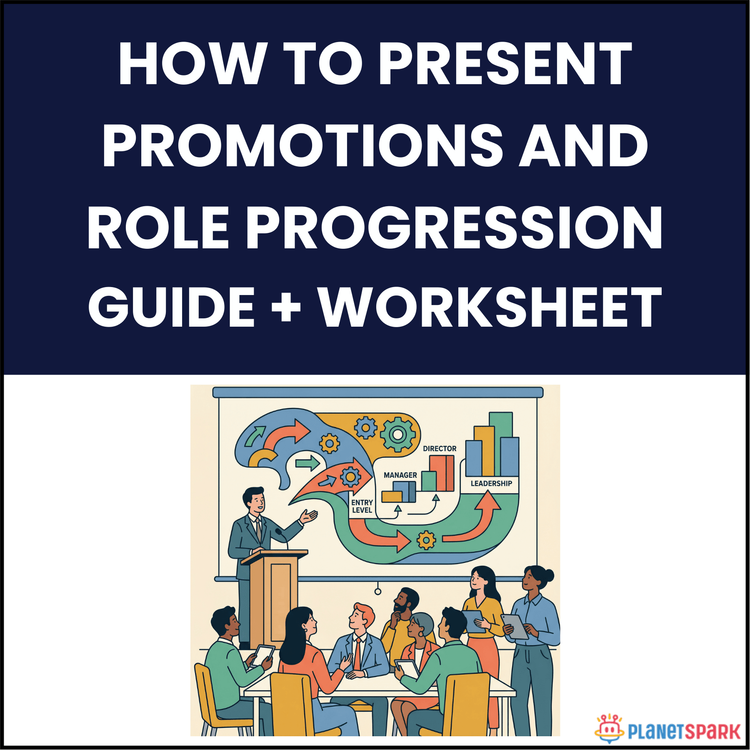
How to present promotions and role progression
How to Present Promotions and Role Progression: A Practical Guide for Confident Career Transitions
Getting promoted should feel like a win. Yet for many working professionals, it comes with anxiety, overthinking, and one big question: “How do I communicate this without sounding awkward, insecure, or overconfident?”
Whether you’re stepping into a senior role, managing former peers, switching functions, or moving into leadership, how you present your promotion matters as much as the promotion itself. Poor communication can create confusion, resistance, or doubts about your readiness. Clear communication, on the other hand, builds trust, credibility, and early momentum.
This guide exists to help you navigate that exact moment. It gives you a structured, practical way to announce and reinforce your role progression so people understand, support, and align with you from day one.
Who Is This Resource For?
This resource is designed for working professionals who:
- Have recently been promoted or are about to move into a bigger role
- Are transitioning from individual contributor to people manager
- Are taking on broader scope, new teams, or expanded responsibilities
- Are switching functions, departments, or specialisations
- Feel unsure about how to communicate their promotion confidently
- Want to avoid awkwardness, resistance, or credibility gaps after a role change
It is especially useful for early to mid-career professionals, first-time managers, and leaders stepping into higher visibility roles.
What Does This Resource Contain?
Inside this guide, you’ll find clear frameworks, scripts, and action plans that walk you through the entire promotion communication journey.
Key elements include:
- A breakdown of different promotion and transition types (vertical, lateral, functional, leadership)
- A three-phase communication strategy covering before, during, and after the announcement
- A pre-announcement checklist to help you align messaging and stakeholders
- A five-question framework to craft a clear, confident core message
- A stakeholder mapping exercise to tailor communication by audience
- Sample scripts for 1:1 conversations and email announcements
- Strategies to handle resistance, scepticism, and difficult reactions
- Practical tools to manage imposter syndrome during transitions
- A detailed first 90-day roadmap with timelines and priorities
- A comprehensive 90-day action checklist across relationships, learning, visibility, and impact
- Guidance on choosing the right communication channels and formats
- Specific advice for being promoted over former peers
- Common mistakes to avoid during role transitions
- Success metrics to measure progress in your new role
- Reflection worksheets and a real-life case study showing successful execution
Summary of the Resource
This is a practical, end-to-end guide to presenting promotions and role progression with clarity, confidence, and credibility. It helps you control the narrative around your transition, manage perceptions proactively, and back your new title with visible action.
Instead of treating a promotion as a one-time announcement, this resource shows you how to approach it as a strategic communication process that unfolds over time.
How Will This Resource Be Useful?
Using this guide will help you:
- Communicate your promotion clearly without sounding defensive or arrogant
- Reduce confusion and resistance among teams and stakeholders
- Build early trust and credibility in your new role
- Handle awkward dynamics, especially with former peers
- Manage self-doubt and imposter syndrome more effectively
- Create alignment around your priorities and expectations
- Establish momentum through structured action in your first 90 days
- Feel more confident stepping into higher responsibility and visibility
The result is a smoother transition, stronger relationships, and faster impact in your new role.
How Should You Use This Resource?
Start by identifying your transition type so you can tailor your communication approach. Before making any announcement, work through the pre-announcement checklist and stakeholder mapping exercise to plan who needs to hear what, and when.
Next, use the core message framework to draft a clear, concise announcement that answers key questions people will naturally have. Adapt the sample scripts to suit different audiences and communication channels.
After the announcement, follow the 90-day roadmap to reinforce your role through consistent action. Use the checklists to track progress, revisit the reflection exercises to course-correct, and measure success across business outcomes, team health, and stakeholder trust.
This resource is meant to be revisited, not skimmed once and forgotten.
Action Steps
- Identify your role transition type and key stakeholders
- Draft your core announcement message using the five-question framework
- Plan and sequence your conversations before making a public announcement
- Choose the right communication channels for each audience
- Use the 90-day checklist to guide your actions after the announcement
- Reflect regularly and adjust based on feedback and results
Promotions don’t succeed on titles alone. They succeed when people understand your role, trust your intent, and see your impact over time. This guide helps you do exactly that—without guesswork or unnecessary stress.
Use it to communicate with clarity, lead with confidence, and grow into your next role with purpose.
Book your free session today!