
How to Prevent Overcommunication or Undercommunication Pitfalls

How to Prevent Overcommunication or Undercommunication Pitfalls
Prevent Overcommunication or Undercommunication Pitfalls: A Practical Playbook for Professionals
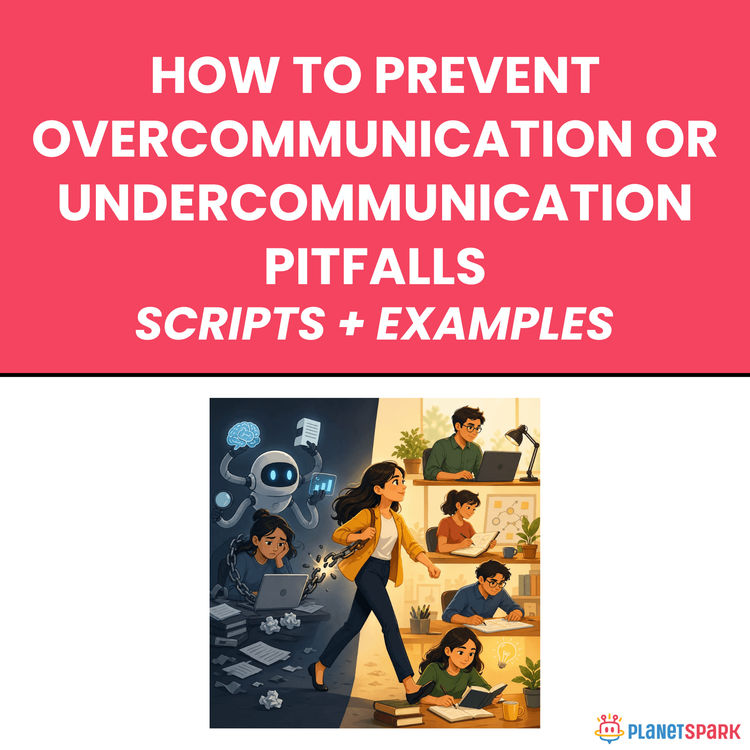
In a world where AI tools promise to make us more efficient, many professionals find themselves either overcommunicating — bombarding colleagues with excessive information — or undercommunicating — leaving gaps that hinder progress. The balance between these extremes is tricky, but crucial. "How to Prevent Overcommunication or Undercommunication Pitfalls" is a practical playbook designed to help you harness AI as a tool without letting it erode the expertise, judgment, and critical thinking that define your career. This guide helps you prevent communication overload while also ensuring that your messages are concise and effective.
Who Is This Resource For?
This playbook is perfect for:
- Career switchers who want to transition into roles where communication is key, without feeling overwhelmed by AI tools.
- Consultants and managers who deal with large amounts of communication and need to streamline their approach.
- Early-career professionals looking to build solid communication skills while managing an increasing volume of information.
- Professionals aiming to increase their communication impact without sacrificing clarity or voice.
If you're struggling to find the right balance between too much and too little communication in your professional life, this playbook is for you.
What Does This Resource Contain?
This resource helps you avoid the pitfalls of overcommunication and undercommunication through the following strategies:
- Understanding the Cognitive Risks of AI : Learn how relying too heavily on AI tools for communication can lead to cognitive atrophy, weakened judgment, and loss of your personal voice.
- The Lever vs. Crutch Framework: Discover how to use AI as a lever to amplify your work, not as a crutch that takes over your critical thinking.
- Practical Habits for Protection: Implement practices that protect core communication tasks as "human-first zones," where your judgment and expertise remain central.
- Weekly Audit System: Build a personal AI audit system to regularly evaluate and optimize your use of communication tools and ensure they enhance your skills, not replace them.
- Mistakes to Avoid: Identify common mistakes like over-relying on AI and not critically evaluating outputs, and learn practical fixes.
Summary of the Resource
This playbook offers a clear framework for professionals who want to use AI in their communication without sacrificing their expertise and judgment. It emphasizes the importance of treating AI as a tool to enhance your work rather than replacing your thinking. With the right practices in place, you’ll build a communication style that’s both efficient and effective, retaining your professional edge.
How Will This Resource Be Useful?
This playbook will help you:
- Protect your critical thinking skills: By using AI as a lever, not a crutch, you maintain your expertise and judgment.
- Avoid communication overload: Implement practical steps to ensure that AI doesn't lead you to over-communicate, overwhelming colleagues with unnecessary details.
- Increase communication clarity: Build stronger, more impactful messages by protecting key communication tasks as human-first zones.
- Refine your AI habits: Regularly evaluate your AI usage, ensuring that the tools you use actually enhance your communication, not replace it.
How Should You Use This Resource?
To get the most out of this playbook:
1. Start by understanding the risks of overreliance: Reflect on how much you depend on AI for communication and where it might be eroding your critical thinking.
2. Apply the Lever vs. Crutch framework: Regularly ask yourself whether you're using AI to enhance your work or avoid doing it yourself. Commit to using AI as a lever.
3. Protect your practice zones: Identify key tasks — writing, ideating, analyzing — that should be done without AI first, ensuring that your judgment remains sharp.
4. Audit your AI usage weekly: Track how much time you’re spending on AI tools, evaluate their effectiveness, and ensure you're not relying on them too much.
5.Learn from common mistakes: Avoid over-accepting AI outputs, using AI out of habit, or skipping the thinking step before prompting an AI tool.
By integrating these habits, you’ll be able to use AI effectively while preserving your expertise, ensuring that your communication is both impactful and aligned with your professional standards.
Action Steps
1. Complete a one-week AI usage audit: Track every instance of AI communication you use during the week and identify whether it’s acting as a Lever or Crutch.
2. Commit to human-first practice zones: Draft emails or reports manually before turning to AI for assistance.
3. Schedule weekly AI practice: Dedicate time each week to practice core skills without AI, like writing or analyzing, to keep your judgment sharp.
4. Avoid common mistakes: Regularly check that you're editing AI output and critically evaluating its results.
By committing to these action steps, you’ll develop the skills needed to communicate effectively, confidently, and without over-relying on AI tools.