
How to Prevent Overdependence on Rigid Systems

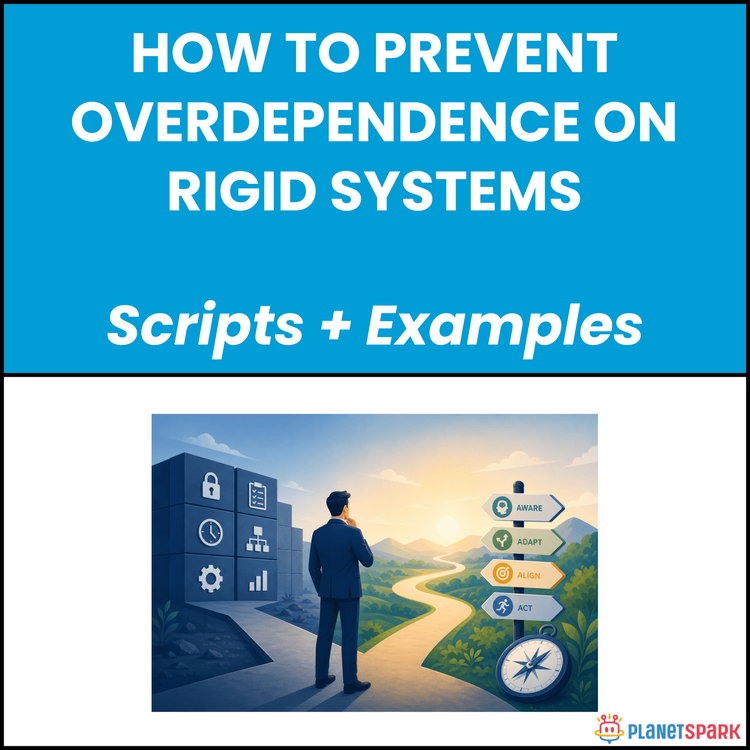
How to Prevent Overdependence on Rigid Systems
Stop Following Systems Blindly: How to Think Independently and Make Better Decisions at Work
Most professionals are trained to follow systems.
Frameworks, templates, processes, SOPs—they’re everywhere. And for good reason. They bring structure, reduce errors, and make work scalable.
But here’s the problem: systems are designed for average situations, not your specific one.
When you rely on them too heavily, something subtle happens. You stop thinking critically. You hesitate when situations don’t fit the template. You wait for clarity instead of creating it.
Over time, this doesn’t just slow you down—it limits your growth.
That’s exactly what this resource, “How to Prevent Overdependence on Rigid Systems,” is designed to solve. It helps you move from blindly following processes to using them intelligently—so you can adapt, think clearly, and make better decisions in real-world situations.
Who Is This Resource For?
This playbook is especially useful for:
- Working professionals (0–15 years experience) operating within structured environments
- Managers and team leads who rely heavily on processes and frameworks
- Consultants who use templates but need to tailor solutions for clients
- Professionals who feel stuck when situations don’t fit existing systems
- Career switchers waiting for the “right process” before taking action
- Anyone looking to build stronger decision-making and critical thinking skills
If you’ve ever thought, “There’s no clear process for this, so I’ll wait”—this resource will change how you approach work.
What Does This Resource Contain?
This playbook combines awareness, frameworks, scripts, and practical tools to help you think more flexibly.
Here’s what you’ll find inside:
System Dependency Awareness Framework
A clear breakdown of common patterns like escalation default, template overuse, and process paralysis—helping you recognize where you rely too much on systems.
Self-Audit Checklist
A structured way to evaluate your decision-making, communication, and leadership patterns—and identify your level of system dependency.
The FLEX Decision Framework
A simple 4-step model: Fit, Limit, Edit, Execute. This helps you decide whether to follow, adapt, or bypass a system.
Real-World Scripts
Practical, word-for-word scripts you can use in meetings to challenge processes, propose alternatives, and communicate confidently.
Adaptive Decision Worksheet
A guided tool to help you think through decisions where systems may not fully apply.
Case Study
A real example showing how a professional moved from rigid process-following to adaptive decision-making—and achieved better results.
Common Mistakes and Fixes
Clear patterns to avoid, along with practical ways to correct them in real time.
Summary of the Resource
This playbook helps you shift from “What does the process say?” to “What does this situation need?”
Instead of blindly following systems, you will learn how to:
- Recognize when systems are limiting you
- Evaluate whether a process actually fits the situation
- Adapt frameworks without losing structure
- Make confident, context-driven decisions
In short, it helps you use systems as tools—not as crutches.
How Will This Resource Be Useful?
The biggest benefit of this resource is sharper thinking and faster decision-making.
After applying it, you will:
Make Better Decisions Under Uncertainty
You’ll stop waiting for perfect processes and start acting with clarity.
Improve Problem-Solving Ability
You’ll learn to adapt frameworks instead of forcing every situation into them.
Increase Professional Confidence
You’ll trust your judgment more—and communicate your reasoning clearly.
Stand Out as a Strategic Thinker
While others follow instructions, you’ll contribute insights and direction.
Work More Efficiently
You’ll avoid delays caused by unnecessary approvals, rigid templates, or over-analysis.
How Should You Use This Resource?
This playbook is designed for immediate application.
Step 1: Build Awareness
Start by identifying where you rely too heavily on systems—use the self-audit checklist.
Step 2: Learn the FLEX Framework
Understand how to quickly evaluate whether a system fits your situation.
Step 3: Apply It to One Real Decision
Pick a current challenge and run the FLEX framework before acting.
Step 4: Use the Scripts
In your next meeting or conversation, use one script to challenge or adapt a process.
Step 5: Reflect on the Outcome
Notice how people respond—and how your decision-making improves.
Step 6: Repeat Consistently
The goal is not to reject systems, but to use them more intelligently over time.
Action Steps
To start right away, follow this simple plan:
1. Identify one situation where a system feels limiting
2. Run the FLEX framework (Fit, Limit, Edit, Execute)
3. Write down your adapted approach
4. Take one action within the next 24 hours
5. Use one script to communicate your thinking
6. Reflect on what worked and what didn’t
7. Repeat this process for the next few decisions
Small shifts in how you think will create big changes in how you work.
Most professionals believe success comes from following systems perfectly.
But the professionals who grow fastest do something different.
They understand systems—and then go beyond them.
They know when to follow, when to adapt, and when to create their own path.
This resource helps you build that capability.
When you stop depending on rigid systems and start thinking flexibly, you don’t just execute better—you lead better.
And that’s what separates good professionals from exceptional ones.
Book your free session today!