
Rejection Recovery Plan

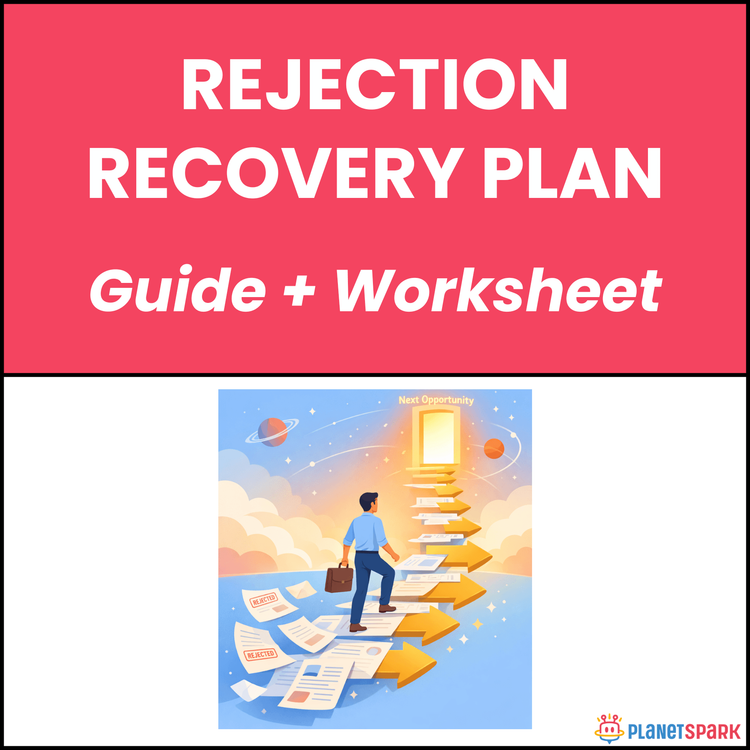
Rejection Recovery Plan
Turn Every Professional Rejection Into Career Momentum: A Practical Recovery Framework for Job Seekers and Professionals
Rejection is one of the most common — and least discussed — experiences in a professional career.
A job offer that never arrives.
A promotion that goes to someone else.
A proposal that doesn’t get approved.
A pitch that receives a polite but firm “no.”
For many working professionals, these moments trigger a familiar cycle: self-doubt, frustration, and the urge to move on as quickly as possible. But rushing past rejection often means missing something incredibly valuable — the insight hidden inside it.
The Rejection Recovery Plan from PlanetSpark is designed to change that. It provides a structured, practical framework that helps professionals process rejection intelligently, learn from it, and return stronger to the next opportunity.
Instead of treating rejection as something to endure, this resource helps you treat it as a strategic turning point in your career.
If you are navigating job searches, career transitions, or competitive professional environments, this guide offers a clear path from disappointment to renewed momentum.
Who Is This Resource For?
This resource is designed specifically for working professionals who want a structured approach to handling career setbacks and rejections.
It is especially useful for:
• Job seekers who are navigating multiple applications and interview processes
• Career switchers entering new industries or roles
• Consultants and freelancers pitching to clients
• Managers and professionals aiming for promotions or leadership roles
• Early to mid-career professionals (0–15 years of experience) building long-term career momentum
Anyone who has experienced rejection in hiring, promotion decisions, or professional opportunities can benefit from this framework.
Instead of leaving recovery to chance, the guide introduces a deliberate system for processing rejection and moving forward strategically.
What Does This Resource Contain?
The Rejection Recovery Plan is not just a guide — it is a practical workbook designed to help professionals reflect, recalibrate, and take action.
Inside the resource, you’ll find:
A Five-Phase Rejection Recovery Framework
The core of the guide is a structured five-phase system that walks professionals through the full journey from rejection to renewed opportunity. The phases include:
• Absorb – acknowledging the emotional impact of rejection
• Analyse – identifying lessons and extracting useful insights
• Recalibrate – adjusting strategy and approach
• Rebuild – restoring confidence and professional momentum
• Re-Engage – returning to new opportunities with clarity and readiness
Reflection Worksheets and Guided Prompts
Each phase includes worksheets designed to help you think clearly and document insights. These prompts encourage honest reflection about emotions, performance, and improvement opportunities.
Strategic Career Adjustment Tools
The guide helps professionals reassess targeting, messaging, preparation, and networking strategies so that the next opportunity is approached more effectively.
Confidence Rebuilding Exercises
One of the most powerful elements in the guide is the “Evidence Bank,” a structured exercise where professionals document past successes and strengths to restore confidence after setbacks.
A Rejection Recovery Checklist
A practical checklist condenses the entire framework into a quick reference that can be used every time you face a professional rejection.
A 72-Hour Rejection Recovery Protocol
The guide also includes a structured timeline for the first 72 hours after rejection, helping professionals avoid common mistakes such as impulsive applications or emotional responses.
Real-World Case Example
A practical career example demonstrates how a professional used the framework to turn a rejection into a career advancement opportunity.
Together, these tools create a repeatable system that professionals can use throughout their careers.
Summary of the Resource
At its core, the Rejection Recovery Plan reframes rejection as a source of data rather than a verdict about your abilities.
The guide introduces a five-phase recovery process that helps professionals:
• Process emotional reactions in a healthy way
• Analyse what actually happened
• Identify skill gaps or communication issues
• Adjust their strategy and positioning
• Restore confidence and professional identity
• Re-enter opportunities with stronger preparation
Rather than offering generic motivational advice, the resource provides a structured toolkit that professionals can apply every time they encounter a setback.
This makes it particularly valuable during periods such as active job searches, career transitions, or competitive promotion cycles.
How Will This Resource Be Useful?
Professional rejection is inevitable. What determines long-term career progress is how effectively you recover from it.
This resource helps professionals:
Turn rejection into learning
Every rejection contains information about fit, presentation, or capability. The guide helps you extract that information clearly.
Avoid emotional decision-making
The structured phases prevent impulsive reactions such as mass-applying to roles immediately after rejection.
Improve your professional narrative
Through recalibration exercises, professionals refine how they communicate their experience, achievements, and value.
Restore confidence quickly
Confidence often drops after rejection. The Evidence Bank and confidence-rebuild tools help restore a grounded sense of professional identity.
Strengthen future opportunities
By analysing what worked and what didn’t, your next application, pitch, or interview becomes measurably stronger.
In short, this resource helps professionals recover faster, think more strategically, and maintain momentum in their careers.
How Should You Use This Resource?
The guide is designed to be both a reference document and an interactive workbook.
A simple way to approach it is:
Step 1: Read the full guide once
Start by reading through the framework to understand the five phases of rejection recovery.
Step 2: Identify where you are in the process
If you recently received a rejection, identify which phase applies to your current situation.
Step 3: Complete the worksheet for that phase
Each section includes reflection prompts and worksheets that help you process the experience systematically.
Step 4: Apply the recalibration insights
Use what you learned to update your CV, pitch, preparation strategy, or targeting approach.
Step 5: Re-engage with renewed clarity
Once the process is complete, return to new opportunities with improved preparation and confidence.
The resource is designed to be reused multiple times throughout your career whenever you encounter professional rejection.
Action Steps
If you are currently navigating a rejection or professional setback, here are a few immediate actions you can take after reading this guide.
1. Reflect on your most recent rejection
Write down what happened and how it made you feel.
2. Identify the type of rejection
Was it a fit issue, a presentation issue, or a skill gap?
3. Document your recent professional wins
Start building your own Evidence Bank of achievements and strengths.
4. Adjust one part of your strategy
Update your resume, refine your professional narrative, or improve interview preparation.
5. Plan your next opportunity intentionally
Instead of rushing forward, approach the next application or pitch with a refined strategy.
These small steps can dramatically change how you respond to professional setbacks.
Professional growth rarely follows a straight path. Every career includes moments of rejection, uncertainty, and recalibration.
What separates professionals who stagnate from those who continue progressing is not whether they experience rejection — it is how they respond to it.
When rejection becomes a moment for reflection, learning, and strategy, it transforms from a setback into a stepping stone.
This resource gives you a practical framework to do exactly that — to recover thoughtfully, rebuild confidence, and return stronger to your next opportunity.
Your next “yes” may begin with understanding the lessons inside the last “no.”