
Resume checklist for tech/non-tech roles

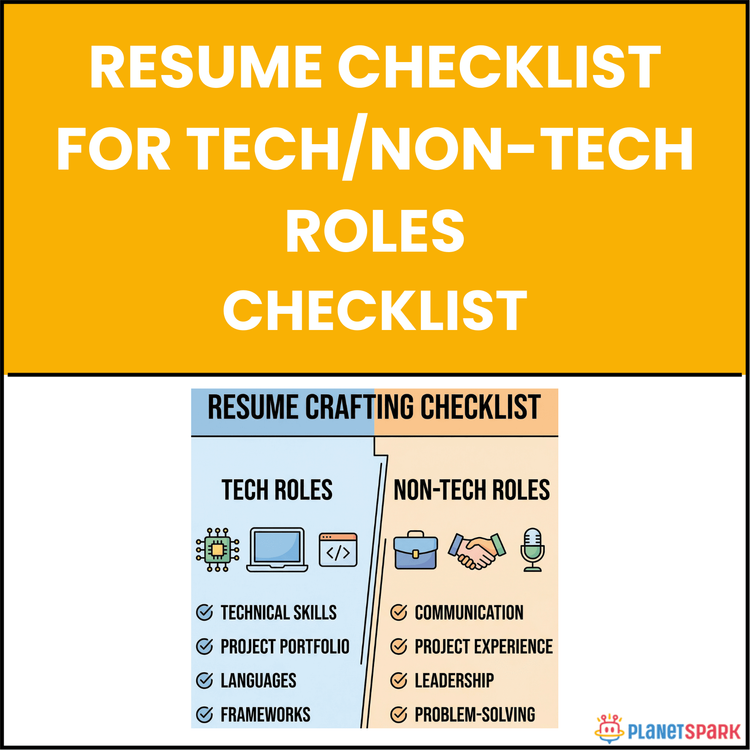
Resume checklist for tech/non-tech roles
Resume Checklist for Tech and Non-Tech Roles: A Practical Guide to Building an Interview-Winning Resume
If you’ve ever sent out dozens of resumes and heard nothing back, the problem is rarely your experience. It’s how that experience is presented. Recruiters spend just a few seconds scanning a resume, and most professionals unknowingly lose that moment due to poor structure, generic language, or lack of impact.
This Resume Checklist for Tech and Non-Tech Roles was created to solve exactly that problem. It’s designed for busy working professionals who need clarity, not theory—and results, not guesswork. Whether you’re applying for a technical role, a non-tech position, or planning a career switch, this resource gives you a clear, step-by-step way to build a resume that actually gets shortlisted.
Who Is This Resource For?
This checklist is built specifically for:
- Working professionals with 0–15 years of experience
- Job seekers applying to tech or non-tech roles
- Career switchers moving across industries or functions
- Early to mid-career professionals aiming for better roles or higher compensation
- Consultants and managers who want a sharper, impact-focused resume
- Anyone struggling with low interview calls despite strong experience
If you’re short on time and want a resume framework that recruiters recognise and trust, this resource is for you.
What Does This Resource Contain?
The checklist walks you through the entire resume-building process in a structured, practical way. Inside, you’ll find:
- A Resume Success Framework based on clarity, relevance, and impact
- Formatting and structure rules that work across industries
- A detailed contact information checklist to avoid basic but costly mistakes
- Guidance on writing a strong professional summary with real examples
- A step-by-step method to write achievement-focused work experience
- Action verbs that strengthen your resume instantly
- Clear instructions on how to quantify achievements with numbers
- Education section best practices based on career stage
- Skills section guidance for both tech and non-tech roles
- ATS optimisation strategies to pass applicant tracking systems
- Optional sections like projects, certifications, awards, and volunteer work
- Common resume mistakes that lead to rejection
- Tech-specific resume considerations, including GitHub and projects
- Career switcher strategies to highlight transferable skills
- A final pre-submission checklist to avoid last-minute errors
- Real before-and-after resume examples
- A 5-day resume action plan for immediate execution
Each section is designed to be practical, skimmable, and easy to apply directly to your own resume.
Summary of the Resource
This resume checklist is a complete, end-to-end guide to building a recruiter-ready resume for both tech and non-tech roles. It helps you move away from generic job descriptions and towards impact-driven, keyword-optimised resumes that clearly communicate your value.
Instead of guessing what recruiters want, you get a proven structure and clear checkpoints to ensure your resume meets modern hiring standards.
How Will This Resource Be Useful?
By using this checklist, you will:
- Improve resume clarity so recruiters can scan it quickly
- Tailor your resume effectively for specific roles
- Communicate achievements instead of just responsibilities
- Increase your chances of passing ATS filters
- Present yourself with more confidence and professionalism
- Reduce rejection caused by formatting, keyword, or structure issues
- Save time by following a clear framework instead of rewriting endlessly
The result is a resume that tells a strong, credible story about your experience—one that hiring managers can trust.
How Should You Use This Resource?
To get maximum value, use the checklist in phases:
1. Start by skimming the full checklist to understand the overall structure.
2. Audit your existing resume against each section.
3. Rewrite your professional summary after completing all other sections.
4. Update work experience using action verbs and quantified results.
5. Tailor skills and keywords based on your target job descriptions.
6. Apply ATS and formatting guidelines before finalising.
7. Use the final checklist before every job application.
You can revisit this resource every time you apply for a new role or update your resume.
Action Steps
Once you access the checklist, take these steps immediately:
1. Block 60–90 minutes of focused time.
2. Review your current resume against the checklist.
3. Rewrite one section at a time instead of everything at once.
4. Identify 2–3 target roles and tailor your resume for them.
5. Run through the final checklist before submitting applications.
Consistent application of this process can significantly improve your interview call rate.
A strong resume is not about sounding impressive—it’s about being clear, relevant, and credible. This checklist gives you a repeatable system you can rely on throughout your career, whether you’re actively job hunting or preparing for future opportunities.
Continuous improvement is key to long-term career growth. Treat your resume as a living document, refine it regularly, and align it with where you want to go next.
Book your free session today!