Class 8 Grammar Worksheet on Argumentative Essays
Class 8EnglishEnglish GrammarFree DownloadPDF

Fashutana Soli BaglaVisit Profile
I am a passionate educator and trainer with over 7 years of experience in teaching English, spoken English, and public speaking. I have worked with students from reputed institutions such as Greenlawns School, Bombay Scottish School, and leading convent schools, helping them build confidence, fluency, and strong communication skills. I love turning shy students into confident speakers and helping them find their voice. Teaching isn’t just my profession—it’s something I genuinely enjoy every single day.
Class 8 Grammar Worksheet on Argumentative Essays
Class 8EnglishEnglish GrammarFree DownloadPDF
Fashutana Soli BaglaVisit Profile
I am a passionate educator and trainer with over 7 years of experience in teaching English, spoken English, and public speaking. I have worked with students from reputed institutions such as Greenlawns School, Bombay Scottish School, and leading convent schools, helping them build confidence, fluency, and strong communication skills. I love turning shy students into confident speakers and helping them find their voice. Teaching isn’t just my profession—it’s something I genuinely enjoy every single day.
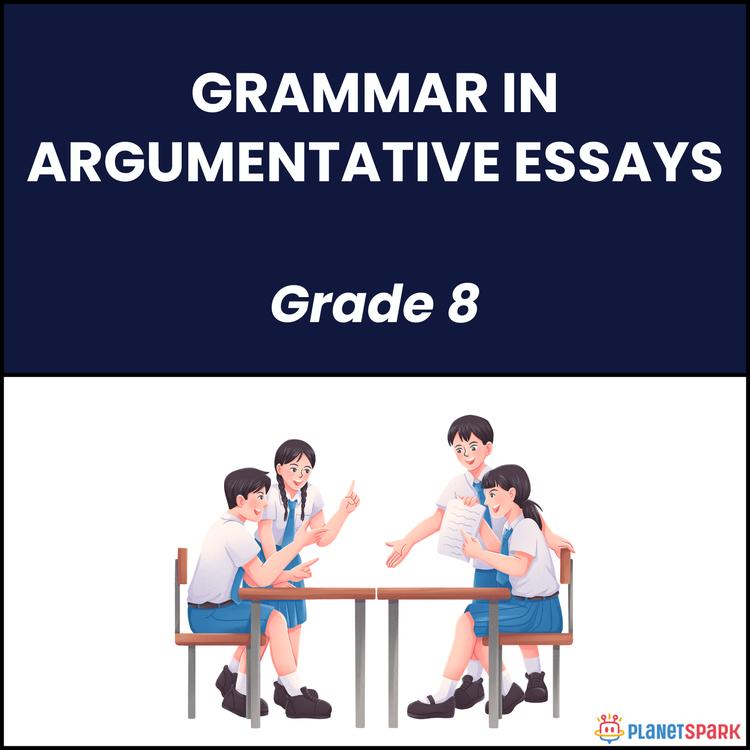
Debate Smart: Grammar in Argumentative Essays for Class 8
This Grade 8 worksheet on Grammar in Argumentative Essays helps students strengthen their academic writing skills through engaging grammar-based activities focused on persuasive and logical writing. Learners explore important argumentative essay vocabulary, structured sentence formation, evidence-based reasoning, and formal writing techniques in a practical and age-appropriate way.
Why Argumentative Essay Grammar Matters in Grammar?
Argumentative writing teaches students how to express ideas clearly while supporting opinions with facts and logic. For Grade 8 learners, this topic is important because:
1. It builds persuasive and analytical writing skills.
2. It improves clarity, organisation, and formal language use.
3. It teaches students how to support claims with evidence.
4. It strengthens logical thinking and structured communication.
What’s Inside This Worksheet?
This worksheet includes five grammar-rich activities that improve understanding of argumentative essay language and structure:
🧠 Exercise 1 – Multiple Choice Questions
Students choose the most suitable argumentative essay word to complete each sentence correctly. This activity improves grammar accuracy and academic vocabulary usage.
✏️ Exercise 2 – Fill in the Blanks
Learners complete sentences using important argumentative essay words such as persuasive, evidential, supportive, and structured. This helps students understand contextual word usage.
📋 Exercise 3 – True or False
Students read statements about argumentative essay grammar and identify whether they are true or false. This reinforces understanding of essay organisation, evidence, and formal writing rules.
📝 Exercise 4 – Underline the Words
Students underline key argumentative essay words in each sentence. This activity helps learners recognise essential writing and grammar terminology.
💡 Exercise 5 – Sentence Writing Tasks
Students write meaningful sentences and explanations related to evidence, opinions, clarity, grammar, and essay structure. This encourages creative thinking and practical grammar application.
✅ Answer Key (For Parents & Educators)
Exercise No. 1 – Multiple Choice Questions
1. a) persuasive
2. b) convincing
3. c) structured
4. c) analytical
5. b) reasonable
6. a) persuasive
7. c) evidential
8. b) supportive
9. a) fact-filled
10. a) structured
Exercise No. 2 – Fill in the Blanks
1. convincing
2. structured
3. evidential
4. supportive
5. irrelevant
6. reasonable
7. analytical
8. persuasive
9. fact-filled
10. subjective
Exercise No. 3 – True or False
1. True
2. False
3. True
4. False
5. False
6. True
7. False
8. False
9. True
10. False
Exercise No. 4 – Underline the Words
1. evidence
2. argument
3. reasons
4. opinion
5. structure
6. facts
7. language
8. claim
9. conclusion
10. essay
Exercise No. 5 – Sample Answers
1. Evidence makes an argument stronger and more believable.
2. I enjoyed the classroom debate about school uniforms.
3. My opinion about the topic changed after the discussion.
4. Grammar improves essay writing by making ideas clear.
5. A strong argument includes facts and clear reasons.
6. Clarity helps readers understand the main idea easily.
7. Facts support an essay by proving the writer’s point.
8. The persuasive speaker used strong examples during the debate.
9. Essay structure helps organise ideas in the correct order.
10. Formal language is important because it makes debates respectful and clear.
Help your child develop persuasive writing confidence and stronger academic grammar skills with engaging argumentative essay practice activities.
Frequently Asked Questions
Students need strong sentence structure, transition words, and persuasive language to write effective argumentative essays.
They guide learners in building claims, supporting opinions, and writing logically organized paragraphs.
Argumentative writing develops reasoning, debate skills, and confidence in expressing viewpoints clearly.