Class 5 Grammar Worksheet on Direct and indirect
Class 5EnglishEnglish GrammarFree DownloadPDF

Nimishka MehtaVisit Profile
I’m an experienced and dedicated educator who believes in creating an engaging and supportive learning environment that encourages students to think critically, communicate confidently, and learn with curiosity.
Class 5 Grammar Worksheet on Direct and indirect
Class 5EnglishEnglish GrammarFree DownloadPDF
Nimishka MehtaVisit Profile
I’m an experienced and dedicated educator who believes in creating an engaging and supportive learning environment that encourages students to think critically, communicate confidently, and learn with curiosity.
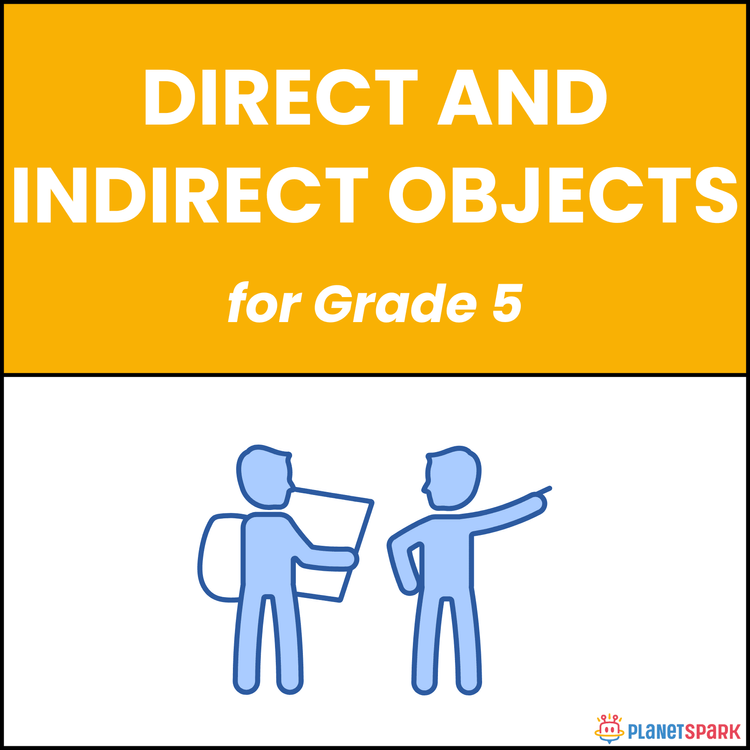
Who Gets What? Direct & Indirect Objects for Class 5
This Class 5 grammar worksheet on Direct and Indirect Objects teaches children how to identify the receiver of an action (indirect object) and what is being acted upon (direct object). Using clear examples and visuals from the worksheet pages 3–8, students learn to spot both objects in real sentences like My mom made me a sandwich or The teacher gave the student a pencil.
The worksheet includes underlining tasks, MCQs, rewriting sentences using correct object identification, a descriptive passage using classroom vocabulary, and a paragraph-writing prompt. The illustrated passage on page 8 features classroom items such as a cool breeze, a tiny box, a colourful craft, echoing bell, scattered materials, and drying brushes—ideal for applying object identification in context.
This worksheet helps young writers understand sentence structure and builds confidence in reading and writing.
Why Direct & Indirect Objects Matter in Grammar?
This concept is essential for Class 5 because:
1. It improves understanding of how actions move from subject → indirect object → direct object.
2. It strengthens sentence construction and grammar accuracy.
3. It builds foundation for writing stories, letters, and descriptions.
4. It supports stronger comprehension skills for middle school.
What’s Inside This Worksheet?
🧠 Exercise 1 – Underline & Circle (Page 3)
Students underline the direct object and circle the indirect object in 10 sentences.
✏️ Exercise 2 – Multiple-Choice Questions (Pages 4–5)
Students identify direct or indirect objects from options such as an apple, Mira, the board, message, marble, and more.
📝 Exercise 3 – Sentence Rewriting (Pages 6–7)
Students rewrite sentences by identifying the INDIRECT or DIRECT object according to the rule shown beside each question.
📘 Exercise 4 – Fill in the Blanks Passage (Page 8)
Students complete a classroom scene with words like breeze, tiny, colourful, loud, craft materials, brushes, and bright.
📝 Exercise 5 – Paragraph Writing (Page 9)
Students write a short paragraph on Friendship using sentences that include direct objects.
ANSWER KEY (For Parents & Educators)
Exercise 1 – Underline Direct Object / Circle Indirect Object
1. made a sandwich / me
2. bought a new toy / my dog
3. sold a cake / the man
4. offered a glass of water / the guest
5. wrote a letter / her grandmother
6. gave a pencil / the student
7. told a funny story / us
8. sent a birthday card / Sarah
9. threw the ball / him
10. showed his collection / me
Exercise 2 – Multiple-Choice Answers (Pages 4–5)
1. (a) an apple
2. (c) Mira
3. (b) the board
4. (a) Dev
5. (c) a marble
6. (b) Aarav
7. (c) a kite
8. (b) craft
9. (b) the cup
10. (c) Anya
Exercise 3 – Sample Correct Rewrites
(Students were asked to either identify the direct or indirect object.)
1. Kabir read Mira a story. → Indirect object: Mira
2. Dev sent Leela a note. → Indirect object: Leela
3. Sana showed Arav a card. → Indirect object: Aarav
4. Tara handed Ishaan a pen. → Indirect object: Ishaan
5. Anya passed Vikram a ball. → Indirect object: Vikram
6. Mira lent Kabir a book. → Indirect object: Kabir
7. Leela gave Sana a sticker. → Indirect object: Sana
8. Arav mailed Dev a letter. → Direct object: a letter
9. Ishaan brought Tara a flower. → Indirect object: Tara
10. Vikram bought Mira a toy. → Direct object: a toy
Exercise 4 – Fill in the Blanks (Sample Answers)
1. breeze
2. tiny
3. colourful
4. loud
5. craft materials
6. brushes
7. bright
Help your child understand action flow and sentence meaning with this fun, interactive Direct & Indirect Objects worksheet!
🔖Book a free trial!
Frequently Asked Questions
They help students identify who receives the action and what the action affects.
It improves sentence completeness and understanding of verb-object relationships.
Use examples and real-life sentences to clarify how objects work in English structure.