Class 5 Relative Adverbs Grammar Worksheet
Class 5EnglishEnglish GrammarFree DownloadPDF

Archita SrivastavaVisit Profile
I am a lively and dynamic educator with four years of teaching experience across online and offline classrooms. I began my journey as a private tutor for three years and currently work as a Public Speaking Expert at PlanetSpark. I have taught students up to high school in CBSE, ICSE, and UP Board, covering all major subjects while guiding them through board exam projects and assignments with creativity, confidence, and a joyful learning spirit. My aim is to build confident speakers and motivated learners who grow with curiosity and joy.
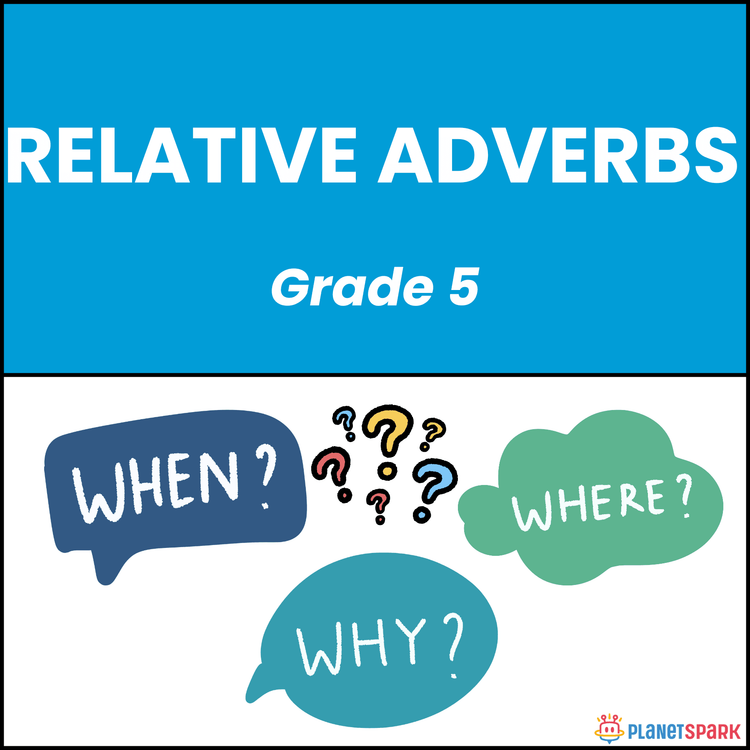
Class 5 Relative Adverbs Grammar Worksheet
Class 5EnglishEnglish GrammarFree DownloadPDF
Archita SrivastavaVisit Profile
I am a lively and dynamic educator with four years of teaching experience across online and offline classrooms. I began my journey as a private tutor for three years and currently work as a Public Speaking Expert at PlanetSpark. I have taught students up to high school in CBSE, ICSE, and UP Board, covering all major subjects while guiding them through board exam projects and assignments with creativity, confidence, and a joyful learning spirit. My aim is to build confident speakers and motivated learners who grow with curiosity and joy.
When, Where, and Why: Relative Adverbs for Grade 5
This Grade 5 worksheet introduces students to relative adverbs — the words where, when, and why — which are used to connect a noun to a descriptive clause that tells more about it. Through five carefully structured exercises, learners develop the ability to identify, choose, combine, and use relative adverbs accurately and confidently.
Why Relative Adverbs Matter in Grammar?
Relative adverbs are an important grammar tool that helps students describe nouns more precisely. For Grade 5 learners, this topic is important because:
1. 'Where' is used to describe a place, 'when' is used for time, and 'why' is used for reason.
2. They connect two ideas into one smooth, well-formed sentence.
3. They improve sentence fluency and help students avoid choppy, repetitive writing.
4. They are widely used in both spoken and written English across all topics.
What's Inside This Worksheet?
This worksheet includes five grammar-rich activities that build fluency with relative adverbs:
Exercise 1 – Underline the Relative Adverbs
Students read ten sentences and underline the relative adverb (where, when, or why) used in each. Example: "This is the kitchen where she cooks dinner." — students underline where. This builds awareness of how each relative adverb connects a noun to a describing clause.
Exercise 2 – Multiple Choice Questions
Students choose the sentence with the correct relative adverb usage from three options in each of ten questions. This sharpens the ability to identify well-formed relative adverb sentences.
Exercise 3 – Combine Sentences Using Given Relative Adverbs
Students are given two separate sentences and a relative adverb (where, when, or why) and must combine them into one sentence. Ten combinations in total. This builds hands-on practice in using relative adverbs correctly.
Exercise 4 – Fill in the Blanks (Paragraph)
Students read a passage featuring characters and places like Rahul, Anjali, a school, a park, and a museum, and fill in the blanks with the correct relative adverb — where, when, or why. This contextual task helps students apply relative adverbs naturally within a story.
Exercise 5 – Sentence Writing
Students write their own sentences using each of the three relative adverbs — where, when, and why. This open-ended activity encourages independent and creative application of relative adverbs in original sentences.
Answer Key (For Parents & Educators)
Exercise 1 – Underline the Relative Adverbs
1. where
2. when
3. why
4. where
5. when
6. why
7. where
8. when
9. why
10. where
Exercise 2 – Multiple Choice Questions
1. c) This is where I study.
2. c) That was when we met.
3. a) This is why I came.
4. b) Here is where we play.
5. a) That was when he left.
6. a) This is why she is happy.
7. c) Here is where he lives.
8. b) That was when it ended.
9. b) This is where it flows.
10. c) That is why he won.
Exercise 3 – Combine Using Relative Adverbs
1. This is the studio where I paint.
2. That is the time when we finished work.
3. This is the motive why I went.
4. Here is the ground where we run.
5. That was the year when he left.
6. This is the aim why she studies.
7. Here is the factory where he works.
8. That was the day when it began.
9. This is the mountain where the river flows.
10. That is the reason why he lost.
Exercise 4 – Fill in the Blanks (Paragraph)
1. where
2. when
3. why
4. where
5. when
6. why
7. where
8. when
9. why
10. where
Exercise 5 – Sentence Writing (Sample Answers)
Answers may vary. Sample sentences are given below for reference.
Where:
1. This is the park where I play cricket every evening.
2. That is the library where I borrow books every weekend.
3. Here is the temple where our family prays on Sundays.
When:
1. I remember the day when we celebrated our school's annual function.
2. Do you know the time when the morning assembly begins?
3. That was the year when my sister was born.
Why:
1. That is the reason why I always finish my homework on time.
2. Can you tell me why Rahul was absent from school today?
3. This is why I love visiting my grandmother's house every summer.
Help your child master the art of describing places, times, and reasons with a Free 1:1 English Grammar Trial Class at PlanetSpark — because knowing when to use where, when, and why makes every sentence more meaningful!
Book a free trial!
Frequently Asked Questions
Relative adverbs like where, when, and why link clauses to a noun or noun phrase.
Students may mix them up because relative adverbs look similar to adverbs of time, place, or manner.
Grammar worksheets offer exercises where students complete sentences using the correct relative adverb.