Class 7 English Worksheet on Comparative Writing
Class 7EnglishEnglish GrammarFree DownloadPDF

Leena JaryalVisit Profile
I’m a passionate English educator with 15 years of experience teaching across IB, IGCSE, and CBSE boards. I’ve also trained learners in spoken English, public speaking and corporate communication. Currently at PlanetSpark, I love empowering learners to communicate with confidence and clarity.
Class 7 English Worksheet on Comparative Writing
Class 7EnglishEnglish GrammarFree DownloadPDF
Leena JaryalVisit Profile
I’m a passionate English educator with 15 years of experience teaching across IB, IGCSE, and CBSE boards. I’ve also trained learners in spoken English, public speaking and corporate communication. Currently at PlanetSpark, I love empowering learners to communicate with confidence and clarity.
Writing Styles: Comparative Paragraphs – Class 7
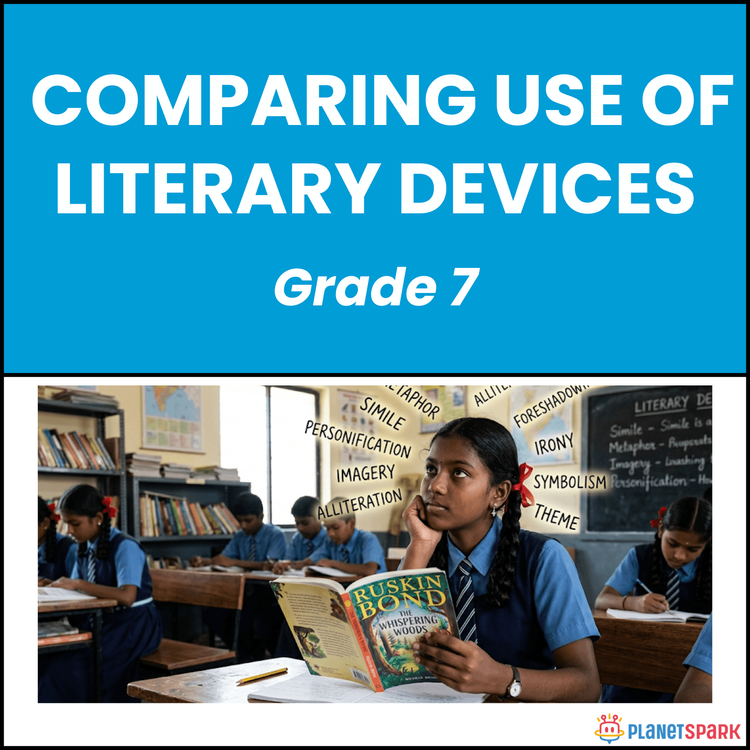
This Grade 7 English literature worksheet helps learners explore comparative writing, focusing on how different techniques like ‘imagery’ and ‘suspense’ shape meaning. Through multiple-choice questions, fill-in-the-blanks, true/false checks, and paragraph writing, students practice analyzing similarities and differences across texts. These activities build comprehension, analytical skills, and confidence in CBSE English.
Why Comparative Writing Matters in Literature?
1. Teaches learners how to identify similarities and differences across texts.
2. Builds analytical skills by comparing writing techniques and their effects.
3. Strengthens comprehension of author style and purpose.
4. Encourages deeper appreciation of storytelling and descriptive language.
What’s Inside This Worksheet?
🧠 Exercise 1 – Multiple Choice Questions
Students answer questions about Aarohi’s imagery and Kabir’s suspense, comparing their techniques and effects.
✔️ Exercise 2 – Fill in the Blanks
Learners identify key terms such as ‘comparison, imagery, suspense, similarity, difference,’ and ‘effect’.
✏️ Exercise 3 – True or False
Students judge whether statements about comparative writing are correct.
🔄 Exercise 4 – Identify Comparisons
Learners label sentences with the technique being compared.
📝 Exercise 5 – Paragraph Writing
Students write sentences showing how comparative analysis is applied to texts.
✅ Answer Key (For Parents & Educators)
Exercise 1 – Multiple Choice Questions
1. b) imagery
2. b) suspense
3. a) same theme
4. c) description versus tension
5. c) visual detail
6. b) building tension
7. a) imagery
8. a) suspense
9. a) text analysis
10. c) compare texts
Exercise 2 – Fill in the Blanks
1. paragraph
2. similarity
3. difference
4. comparison
5. imagery
6. suspense
7. theme
8. style
9. effect
10. analysis
Exercise 3 – True or False
1. True
2. True
3. False
4. False
5. False
6. True
7. False
8. True
9. True
10. False
Exercise 4 – Identify Comparisons
1. Imagery (Aarohi)
2. Suspense (Kabir)
3. Same theme (rain)
4. Imagery creates pictures
5. Suspense creates curiosity
6. Different techniques used
7. Styles clearly different
8. Different effects on readers
9. Comparison highlights differences
10. Writing shows analysis
Exercise 5 – Paragraph Writing (Fill in the Blanks)
In a school in ‘Delhi’, a writing competition was announced where students had to describe a ‘rainy’ day. The announcement created ‘excitement’ across the classrooms, as many students loved the idea of capturing the mood of rain in ‘words’. Aarohi wrote a descriptive ‘paragraph’ focusing on imagery. She described the rain as ‘shining’ drops and the sky as a dark ‘blanket’. Meanwhile, Kabir wrote a paragraph focusing on ‘suspense’. He described the silence before the storm and the sudden ‘thunder’ that followed. His writing created tension and ‘curiosity’, making readers wonder what might happen next. Both students used different ‘styles’ to present the same theme of rain.
Help your child master comparative writing with engaging Class 7 literature practice.
Book a free trial!
Frequently Asked Questions
Comparative writing teaches students to analyze similarities and differences between texts, characters, or themes in English worksheets.
Students can practice organizing ideas with comparison structures, evidence, and transition words in guided activities.
It develops analytical thinking and prepares students for advanced reading and writing tasks in higher grades.