Class 6 Worksheet on Idiom and Proverb Comparison
Class 6EnglishEnglish GrammarFree DownloadPDF

Yogita SethiVisit Profile
I am a dedicated and student-focused educator with experience in teaching English grammar, vocabulary, and communication skills to young learners. I specialize in creating clear, engaging, and age-appropriate worksheets that make learning simple and enjoyable. My goal is to help students build strong language foundations with confidence and curiosity.
Class 6 Worksheet on Idiom and Proverb Comparison
Class 6EnglishEnglish GrammarFree DownloadPDF
Yogita SethiVisit Profile
I am a dedicated and student-focused educator with experience in teaching English grammar, vocabulary, and communication skills to young learners. I specialize in creating clear, engaging, and age-appropriate worksheets that make learning simple and enjoyable. My goal is to help students build strong language foundations with confidence and curiosity.
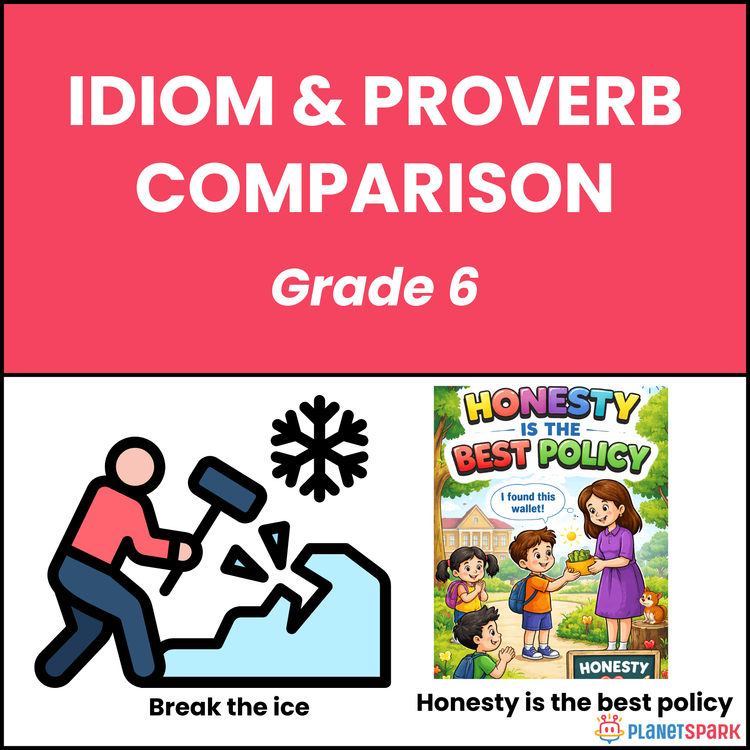
Idiom & Proverb Comparison for Class 6
This Grade 6 worksheet helps students understand and differentiate between common idioms and proverbs. Through engaging activities like matching, fill-in-the-blanks, multiple-choice questions, and sentence rewriting, students gain a deeper understanding of figurative language, its meanings, and uses.
Why Idioms & Proverbs Matter in Grammar?
Idioms and proverbs enrich vocabulary and enhance communication skills. For Grade 6 learners, this topic is important because:
1. They help in expressing ideas in a more creative and impactful way.
2. Mastery of idioms and proverbs makes communication sound more natural.
3. They are widely used in both formal and informal contexts.
4. Understanding them strengthens reading comprehension and writing skills.
What’s Inside This Worksheet?
This worksheet includes five engaging exercises to help students grasp the meaning and application of idioms and proverbs:
Exercise 1 – Match the Following
Students match idioms and proverbs with their correct meanings, such as “make hay while the sun shines” for “taking advantage of opportunities.”
Exercise 2 – True/False Statements
Students decide whether the idiom or proverb used in the sentence is correct or incorrect.
Exercise 3 – Fill in the Blanks
Students fill in sentences with the correct idioms or proverbs, helping to apply them in context.
Exercise 4 – Multiple Choice Questions
Students select the most suitable idiom or proverb to complete the sentence, reinforcing their understanding of each.
Exercise 5 – Sentence Rewriting
Learners rewrite incorrect sentences with the appropriate idiom or proverb, ensuring accurate usage.
Answer Key (For Parents & Educators)
Exercise 1 – Match the Following
1. Too many irons in the fire – Prioritization
2. Bite the bullet – Overcoming Adversity
3. Burn the midnight oil – Hard Work
4. Hit the nail on the head – Clear Decision Making
5. Don’t cry over spilled milk – Acceptance of Mistakes
6. The ball is in your court – Responsibility
7. A stitch in time saves nine – Proactive Action
8. When the cat's away, the mice will play – Behavioral Flexibility
9. Make hay while the sun shines – Taking Advantage of Opportunities
10. Rome wasn't built in a day – Patience and Persistence
Exercise 2 – True/False Statements
1. True
2. False
3. True
4. False
5. True
6. False
7. True
8. True
9. False
10. False
Exercise 3 – Fill in the Blanks
1. hide truth
2. act timely
3. expensive
4. exaggerate
5. confused
6. no fun
7. avoid topic
8. hardwork pays
9. accept consequences
10. regret
Exercise 4 – Multiple Choice Questions
1. b) in the dark
2. c) the early bird catches the worm
3. a) ran out of time
4. d) look before you leap
5. b) burned the midnight oil
6. d) united we stand, divided we fall
7. b) fell flat
8. c) honesty is the best policy
9. a) call it a day
10. d) many hands make light work
Exercise 5 – Sentence Rewriting
1. She was very happy and felt over the moon after the results.
2. He studied all night and was burnt the midnight oil before the exam.
3. They solved it easily as it was a piece of cake.
4. Riya shared the secret and decided to let the cat out of the bag.
5. He reached late and said better late than never.
6. The answer came suddenly and it was out of the blue.
7. She avoided the topic and tried to beat around the bush.
8. He was very tired and hit the sack early
9. They worked together and believed many hands make light work..
10. He missed the chance and said he missed the boat.
Help your child master idioms and proverbs with engaging exercises today.
Frequently Asked Questions
Idioms are phrases with meanings not deducible from individual words, while proverbs express wisdom or advice.
Understanding idioms and proverbs enriches language, making communication more vivid and culturally relevant.
By practicing them in context and using them in sentences, students improve their understanding and usage of figurative language.