Class 3 English Grammar Worksheet on Apostrophes
Class 3EnglishEnglish GrammarFree DownloadPDF

Archita SrivastavaVisit Profile
I am a lively and dynamic educator with four years of teaching experience across online and offline classrooms. I began my journey as a private tutor for three years and currently work as a Public Speaking Expert at PlanetSpark. I have taught students up to high school in CBSE, ICSE, and UP Board, covering all major subjects while guiding them through board exam projects and assignments with creativity, confidence, and a joyful learning spirit. My aim is to build confident speakers and motivated learners who grow with curiosity and joy.
Class 3 English Grammar Worksheet on Apostrophes
Class 3EnglishEnglish GrammarFree DownloadPDF
Archita SrivastavaVisit Profile
I am a lively and dynamic educator with four years of teaching experience across online and offline classrooms. I began my journey as a private tutor for three years and currently work as a Public Speaking Expert at PlanetSpark. I have taught students up to high school in CBSE, ICSE, and UP Board, covering all major subjects while guiding them through board exam projects and assignments with creativity, confidence, and a joyful learning spirit. My aim is to build confident speakers and motivated learners who grow with curiosity and joy.
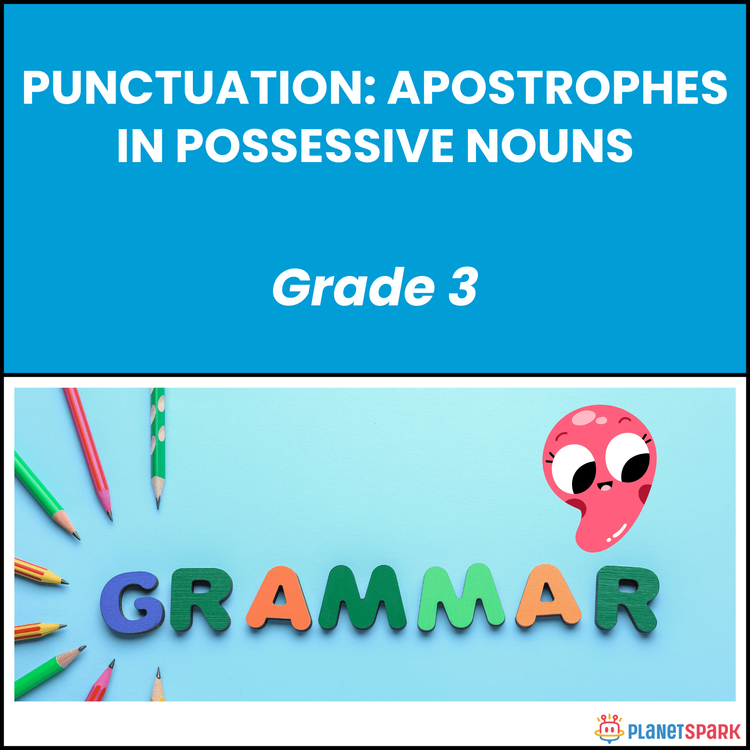
Possession Power: Apostrophes Made Easy for Class 3
This Class 3 worksheet focuses on using apostrophes correctly to show possession through clear and engaging grammar activities. It helps young learners understand how apostrophes are used with names, singular nouns, and objects to show ownership in simple sentences and short paragraphs.
This worksheet turns apostrophe practice into a simple editing skill that builds strong foundations in grammar and punctuation for everyday writing tasks.
Why Apostrophes for Possession Matter in Grammar?
Apostrophes help show who owns or belongs to something. For Class 3 learners, this topic is important because:
1. Apostrophes clarify meaning in sentences about ownership.
2. They help avoid confusion between plural and possessive nouns.
3. They improve sentence accuracy and writing confidence.
4. They support better paragraph writing and reading comprehension.
What’s Inside This Worksheet?
This worksheet includes five grammar-rich activities that build accuracy with possessive apostrophes:
🧠 Exercise 1 – Multiple Choice Sentence Selection
Students choose the sentence with correct apostrophe use to show possession from three options.
✏️ Exercise 2 – True or False
Learners decide whether each sentence uses apostrophes correctly, strengthening their punctuation awareness.
📋 Exercise 3 – Add Apostrophes
Students insert apostrophes in the correct places to fix sentences that show ownership.
📝 Exercise 4 – Sentence Rewriting
Children rewrite sentences by adding apostrophes correctly, reinforcing rules through hands-on practice.
📖 Exercise 5 – Paragraph Editing
Students read a short passage and add apostrophes in the correct places, improving clarity and correctness in paragraph writing.
✅ Answer Key (For Parents & Educators)
Exercise 1 – Choose the Sentence with Correct Apostrophe Use
1. a) The toy belongs to Priya.
2. b) That is Amit's book.
3. a) The bag is Meera's.
4. b) The dog's tail is long.
5. c) The pencil belongs to Karan's.
6. a) Siya's doll is pink.
7. c) The ball is Vivaan's.
8. a) Radhika's bag is heavy.
9. c) The hat belongs to Aditya.
10. b) That is Tanya's dress.
Exercise 2 – True or False
1. True 2. False 3. False 4. False 5. True
6. False 7. True 8. True 9. False 10. True
Exercise 3 – Add Apostrophes
1. This is Sahil's notebook.
2. That is Myra's dress.
3. The bird's nest is warm.
4. Reyansh's bag is heavy.
5. The cat's tail is fluffy.
6. This is Anaya's pencil box.
7. That is Vihaan's cricket bat.
8. The dog's bone is big.
9. Prisha's doll is pretty.
10. That is Yash's water bottle.
Exercise 4 – Rewrite the Sentences with Apostrophes
1. This is Arya's book.
2. The rabbit's ears are long.
3. Diya's bag is pink.
4. That is Kabir's toy car.
5. That is Laksh's tiffin box.
6. The monkey's tail is curly.
7. This is Riya's painting.
8. That is Ayaan's football.
9. The elephant's trunk is strong.
10. This is Sara's bicycle.
Exercise 5 – Paragraph Editing
Isha went to her friend's house for a party.
She saw Manav's new toys on the floor.
His sister's games were on the shelf.
They played with Isha's brother's cricket set in the garden.
The dog's collar had a bell on it.
They ate cake from Tara's mother’s kitchen.
Later they read from Vivek's father's book collection.
Isha enjoyed seeing Ravi's painting on the wall.
Before leaving she forgot Maya's umbrella near the door.
Everyone had fun at Manav's birthday party.
Help your child master possessive apostrophes with guided punctuation practice and expert support today.
Frequently Asked Questions
An apostrophe shows ownership, such as “the boy’s bag,” helping children understand relationships between nouns in sentences.
The apostrophe is placed before or after the letter s depending on whether the noun is singular or plural, which is taught clearly through grammar worksheets.
Children often mix up plurals and possession, so focused practice with English worksheets helps them recognize the difference between “dogs” and “dog’s.”