
Grade 3 Understanding Poems on Leisure by W H Davies

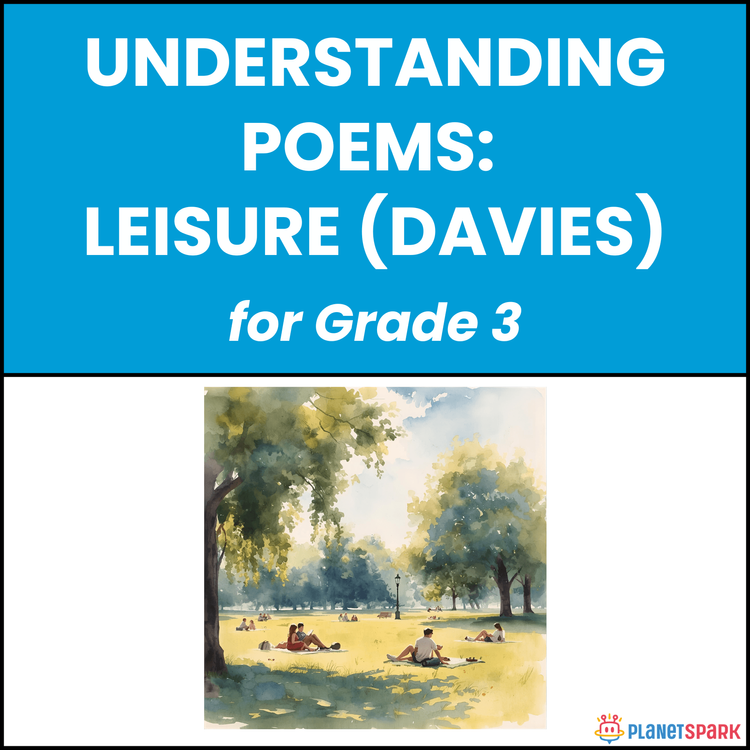
Grade 3 Understanding Poems on Leisure by W H Davies
Time to Stand and Stare: Understanding "Leisure" by Davies for Class 3
This Grade 3 poetry comprehension worksheet is based on W. H. Davies’ classic poem “Leisure.” It helps children reflect on the importance of slowing down and enjoying the simple beauties of nature.
Through multiple-choice, short-answer, and reflection-based exercises, learners enhance comprehension, vocabulary, and emotional awareness — while discovering why taking time to “stand and stare” matters.
Why Understanding Poems Matters in Grammar?
Understanding poetry helps children develop imagination and awareness of rhythm and meaning in language. For Grade 3 learners, this topic is important because:
1. It builds vocabulary through imagery and comparison.
2. It improves reading fluency and emotional expression.
3. It helps children reflect on values like balance and mindfulness.
4. It encourages appreciation of nature and observation skills.
What’s Inside This Worksheet?
📘 Exercise 1 – Multiple Choice Questions
Students choose the correct options about the poem’s message, comparisons, and poetic imagery.
📝 Exercise 2 – Short Answer Questions
Students write answers describing what the poet observes and how he views life.
💡 Exercise 3 – Critical Thinking Questions
Students analyze the poem’s meaning, interpret the idea of “care,” and connect it to their own life experiences.
🏷️ Bonus Task – Word Meaning or Title Creation
Students explain the meaning of “leisure” or create a 5–7-word title that reflects the poem’s theme.
✅ Answer Key (For Parents & Educators)
Exercise 1 – Choose the Correct Option
1. a) Having no time to enjoy nature
2. b) Skies at night
3. a) A dancer representing nature
Exercise 2 – Short Answers
1. The poet asks if life is worth it when we never stop to look.
2. He says streams shine like stars at night.
3. Sheep and cows represent calmness and peace in nature.
Exercise 3 – Critical Thinking
1. The poet thinks people are “full of care” because they are too busy to notice beauty.
2. He compares streams to stars to show the magic in nature.
3. The poem teaches that life is richer when we slow down and appreciate small wonders.
4. Leisure means free time to enjoy life.
Help your child discover mindfulness and poetic imagination through joyful learning. Start a calm and creative reading class today!
🔖Book a free trial!
Frequently Asked Questions
It encourages noticing details, appreciating nature, and reflecting on emotions, supporting CBSE English comprehension growth.
Reading aloud and discussing pauses, stress, and flow improves fluency, understanding, and English for early learners.
It cultivates mindfulness, attention to detail, and critical thinking while enjoying simple yet meaningful poetic passages.