Class 2 Vocabulary Worksheet on Weather Tools and Conditions
Class 2EnglishEnglish GrammarFree DownloadPDF

Sejal JainVisit Profile
An English educator with 10+ years of experience, I hold a Master’s in English Literature and a TESOL certification. My diverse professional background allows me to bring fresh perspective, strong communication, and thoughtful intention to every aspect of my work in education.
Class 2 Vocabulary Worksheet on Weather Tools and Conditions
Class 2EnglishEnglish GrammarFree DownloadPDF
Sejal JainVisit Profile
An English educator with 10+ years of experience, I hold a Master’s in English Literature and a TESOL certification. My diverse professional background allows me to bring fresh perspective, strong communication, and thoughtful intention to every aspect of my work in education.
Weather Word Wizards: Tools and Conditions for Grade 2
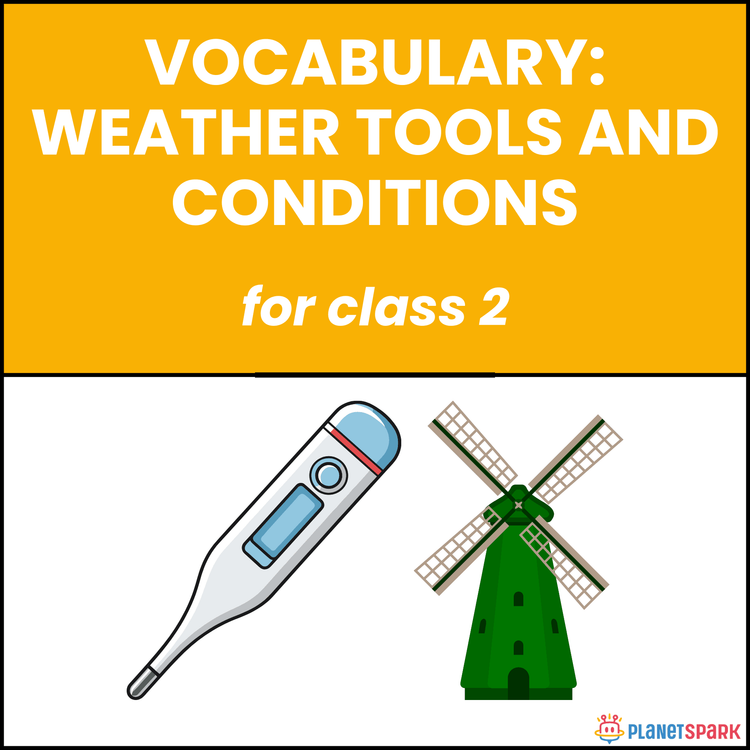
This Grade 2 worksheet on Vocabulary: Weather Tools and Conditions helps learners build strong subject-based vocabulary related to weather instruments and weather conditions. Understanding these words strengthens reading comprehension and connects language learning with Science and EVS topics.
Through structured multiple-choice exercises, students identify weather tools such as thermometer, rain gauge, barometer, anemometer, hygrometer, radar, satellite, wind vane, and weather chart. They also recognise weather condition words like sunny, rainy, windy, cloudy, foggy, snowy, freezing, and drizzly.
Why Weather Tools and Condition Words Matter in Vocabulary?
Understanding weather-related vocabulary is important because:
1. It builds awareness of how weather is measured and observed.
2. It strengthens descriptive language skills.
3. It supports Science and EVS learning.
4. It helps children talk confidently about daily weather changes.
What’s Inside This Worksheet?
This worksheet includes three structured vocabulary exercises:
🧠 Exercise 1 – Weather Instrument Vocabulary
Students identify tools used to measure temperature, rainfall, air pressure, wind speed, humidity, sunshine, snowfall, and daily weather records.
✏️ Exercise 2 – Expanded Weather Tool Vocabulary
Learners recognise advanced weather tools such as windsock, windmill, satellite, radar, rain radar, space camera, and wind vane.
📋 Exercise 3 – Weather Condition Words
Students identify descriptive words such as foggy, sunny, windy, icy, rainy, stormy, drizzly, freezing, snowy, and cloudy.
✅ Answer Key (For Parents & Educators)
Exercise 1 – Weather Instrument Vocabulary
1. thermometer
2. rain gauge
3. compass
4. barometer
5. anemometer
6. hygrometer
7. sunshine meter
8. weather chart
9. snow gauge
10. sundial
Exercise 2 – Expanded Weather Tool Vocabulary
1. windsock
2. windmill
3. satellite
4. radar
5. radar
6. rain radar
7. radar
8. space camera
9. satellite
10. wind vane
Exercise 3 – Weather Condition Words
1. foggy
2. sunny
3. windy
4. icy
5. rainy
6. stormy
7. cloudy
8. freezing
9. drizzly
10. snowy
This worksheet strengthens subject vocabulary and helps learners confidently understand and describe weather tools and conditions.
Help your child speak confidently about the world around them with expert-designed weather vocabulary practice.
Frequently Asked Questions
Weather vocabulary includes tools used to measure weather and words that describe weather conditions.
Because both are taught together, children need guided practice to understand what measures weather and what describes it.
Structured tasks help students correctly identify and use weather-related words.