Class KG English Worksheet on Vocabulary Feelings Senses and Missing Words
KGEnglishEnglish GrammarFree DownloadPDF

Abshar AfrozVisit Profile
I am an enthusiastic English educator with a strong passion for helping students develop confidence in communication. At Planet Spark, I specialize in teaching Public Speaking and Creative Writing, guiding learners to express themselves clearly, think creatively, and speak with impact. Drawing on my teaching experience and warm, engaging style, I help children develop fluent English, powerful presentation skills, and a love for writing. My sessions are interactive, skill-focused, and designed to build both language proficiency and self-confidence in young minds.
Class KG English Worksheet on Vocabulary Feelings Senses and Missing Words
KGEnglishEnglish GrammarFree DownloadPDF
Abshar AfrozVisit Profile
I am an enthusiastic English educator with a strong passion for helping students develop confidence in communication. At Planet Spark, I specialize in teaching Public Speaking and Creative Writing, guiding learners to express themselves clearly, think creatively, and speak with impact. Drawing on my teaching experience and warm, engaging style, I help children develop fluent English, powerful presentation skills, and a love for writing. My sessions are interactive, skill-focused, and designed to build both language proficiency and self-confidence in young minds.
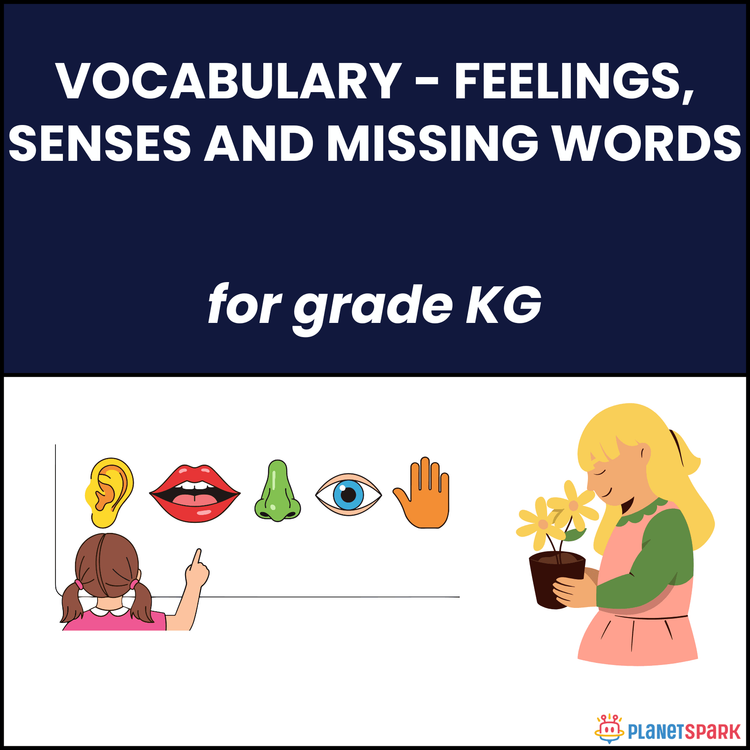
Vocabulary – Feelings, Senses and Missing Words: Grade KG Worksheet
This Grade KG worksheet helps young learners build strong vocabulary and observation skills by exploring emotions, senses, and logical word patterns. Through picture-based activities, children identify feelings from facial expressions, compare sizes, describe taste, touch, and smell, and complete picture sets using missing-word logic. The worksheet encourages careful observation, sensory awareness, and early thinking skills, making it ideal for kindergarten learners developing foundational grammar and vocabulary.
Why Feelings, Senses and Missing Words Matter in Early Learning?
1. Recognizing feelings helps children express emotions clearly.
2. Sensory words build awareness of taste, touch, and smell.
3. Comparing sizes strengthens observation and thinking skills.
4. Missing-word activities support logical thinking and pattern recognition.
What’s Inside This Worksheet?
The worksheet contains six structured picture-based exercises designed especially for KG learners.
✅ Answer Key (For Parents & Educators)
Exercise No. 1 – Identify Feelings
1. a) happy
2. a) sad
3. b) angry
4. b) excited
5. a) surprised
6. a) tired
7. b) scared
8. a) loving
9. a) calm
10. a) sad
Exercise No. 2 – Identify TALL Objects
1. a) tree
2. b) giraffe
3. b) building
4. a) boy
5. a) elephant
6. a) diya
7. b) eraser
8. a) palm tree
9. b) ostrich
10. b) spoon
Exercise No. 3 – Taste Words
1. a) sweet
2. a) sweet
3. b) spicy
4. a) sweet
5. b) salty
6. a) salty
7. b) sweet
8. b) sweet
9. a) spicy
10. b) salty
Exercise No. 4 – Touch and Feel
1. b) hard
2. b) soft
3. b) hot
4. b) smooth
5. b) warm
6. a) hard
7. b) cold
8. a) soft
9. b) hot
10. a) sharp
Exercise No. 5 – Smell Words
1. b) good
2. b) good
3. a) good
4. b) bad
5. a) bad
6. b) good
7. b) good
8. a) strong
9. a) good
10. a) good
Exercise No. 6 – Missing Words
1. b) grapes
2. a) car
3. a) truck
4. a) pen
5. b) socks
6. a) bowl
7. b) cloud
8. b) hospital
9. a) shirt
10. b) fly
Help your child explore feelings, senses, and thinking skills through fun and meaningful picture-based vocabulary practice.
🔖Book a free trial!
Frequently Asked Questions
It builds emotional awareness, sensory vocabulary, and early logical thinking through pictures.
They help children describe the world using taste, touch, and smell words clearly.
They improve pattern recognition and prepare children for early problem-solving.