Class 5 Adjective vs Predicate Adjective Worksheet
Class 5EnglishEnglish GrammarFree DownloadPDF

Archita SrivastavaVisit Profile
I am a lively and dynamic educator with four years of teaching experience across online and offline classrooms. I began my journey as a private tutor for three years and currently work as a Public Speaking Expert at PlanetSpark. I have taught students up to high school in CBSE, ICSE, and UP Board, covering all major subjects while guiding them through board exam projects and assignments with creativity, confidence, and a joyful learning spirit. My aim is to build confident speakers and motivated learners who grow with curiosity and joy.
Class 5 Adjective vs Predicate Adjective Worksheet
Class 5EnglishEnglish GrammarFree DownloadPDF
Archita SrivastavaVisit Profile
I am a lively and dynamic educator with four years of teaching experience across online and offline classrooms. I began my journey as a private tutor for three years and currently work as a Public Speaking Expert at PlanetSpark. I have taught students up to high school in CBSE, ICSE, and UP Board, covering all major subjects while guiding them through board exam projects and assignments with creativity, confidence, and a joyful learning spirit. My aim is to build confident speakers and motivated learners who grow with curiosity and joy.
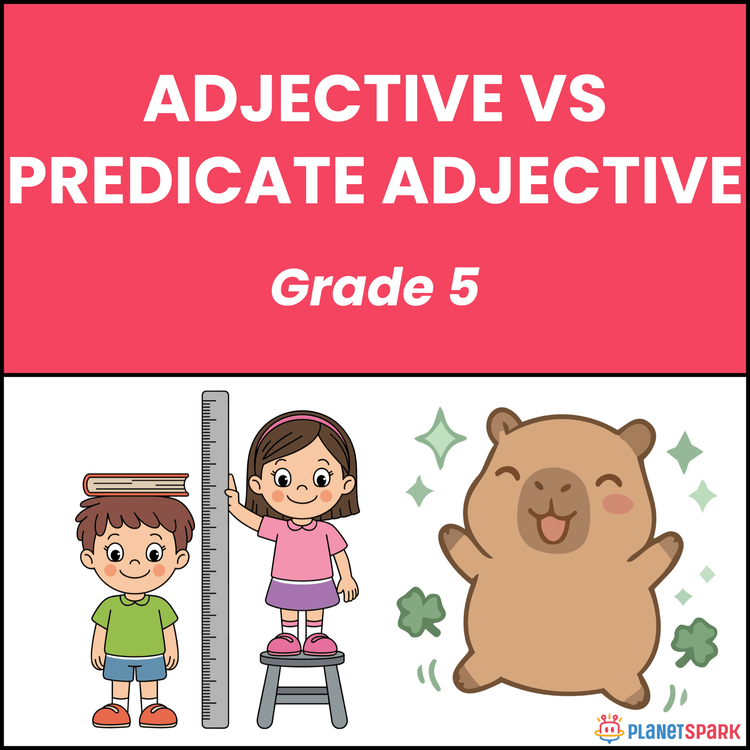
Describe It Right: Adjective vs Predicate Adjective Worksheet for Class 5
This Grade 5 worksheet helps students understand the difference between attributive adjectives (which describe nouns directly before them) and predicate adjectives (which follow linking verbs to describe the subject). Through five carefully designed exercises — multiple choice questions, fill in the blanks, match the following, underline the incorrect form, and paragraph writing — students learn to identify where an adjective sits in a sentence and why its form matters.
Why Adjective vs Predicate Adjective Matters in Grammar?
Understanding how adjectives function in different positions is a key milestone in Grade 5 English grammar because:
1. Adjectives placed before a noun (attributive adjectives) describe the noun directly, e.g., "the beautiful flower."
2. Adjectives placed after a linking verb (predicate adjectives) describe the subject, e.g., "the flower looks beautiful."
3. Confusing adjective forms with adverbs is one of the most common grammar errors at this level.
4. Correct adjective placement strengthens both written expression and spoken clarity.
What's Inside This Worksheet?
This worksheet includes five grammar-focused activities that build confidence in using adjectives correctly:
Exercise 1 – Multiple Choice Questions
Students choose the correct adjective form from three options to complete each sentence. The task trains students to recognize whether a word is an adjective, adverb, or noun form, and to pick the right one based on where it appears in the sentence. Example: "The __________ flowers bloom in the garden." → beautiful.
Exercise 2 – Fill in the Blanks (Word Pairs)
Students are given a pair of words (e.g., blue / blueness) and must choose the correct adjective form to fill the blank. This exercise reinforces the distinction between adjective and noun forms, as well as attributive and predicate adjective usage.
Exercise 3 – Match the Following
Students match each incomplete sentence on the left with the correct adjective from the right column. This activity strengthens vocabulary recognition and the ability to select contextually appropriate adjectives.
Exercise 4 – Underline the Incorrect Adjective Form
Each sentence contains an incorrect word used in place of an adjective (usually an adverb or noun form). Students underline the incorrect word, building their editing and proofreading skills.
Exercise 5 – Paragraph Writing
Students fill in the blanks within a connected paragraph using suitable adjective forms. This exercise brings together all skills from the previous exercises and encourages students to apply their understanding in a real writing context.
Answer Key (For Parents & Educators)
Exercise 1 – Multiple Choice Questions
1. b) beautiful
2. a) beautiful
3. a) brilliant
4. b) happy
5. c) sweet
6. c) loud
7. a) pretty
8. b) delicious
9. c) polite
10. a) joyful
Exercise 2 – Fill in the Blanks
1. blue
2. proud
3. yellow
4. green
5. graceful
6. dark
7. angry
8. tall
9. hot
10. tired
Exercise 3 – Match the Following
1. cold
2. sweet
3. true
4. warm
5. interesting
6. pretty
7. tall
8. long
9. good
10. deep
Exercise 4 – Underline the Incorrect Adjective Form
1. beautifully (should be: beautiful)
2. beautifully (should be: beautiful)
3. brilliantly (should be: brilliant)
4. happily (should be: happy)
5. sweetly (should be: sweet)
6. loudly (should be: loud)
7. prettily (should be: pretty)
8. deliciously (should be: delicious)
9. politely (should be: polite)
10. joyfully (should be: joyful)
Exercise 5 – Paragraph Writing
1. bright
2. blue
3. brilliant
4. happy
5. beautiful
6. green
7. sweet
8. loud
9. pretty
10. delicious
11. polite
12. deep
Help your child use adjectives with confidence — enroll in a Free 1:1 Grammar Trial Class at PlanetSpark today!
Book a free trial!
Frequently Asked Questions
A predicate adjective describes the subject and appears after linking verbs like is, seem, or become.
A regular adjective comes before a noun, while a predicate adjective follows a linking verb.
The key difference is that predicate adjectives follow a linking verb.