Class 5 Compound Nouns Grammar Practice Worksheet
Class 5EnglishEnglish GrammarFree DownloadPDF

Archita SrivastavaVisit Profile
I am a lively and dynamic educator with four years of teaching experience across online and offline classrooms. I began my journey as a private tutor for three years and currently work as a Public Speaking Expert at PlanetSpark. I have taught students up to high school in CBSE, ICSE, and UP Board, covering all major subjects while guiding them through board exam projects and assignments with creativity, confidence, and a joyful learning spirit. My aim is to build confident speakers and motivated learners who grow with curiosity and joy.
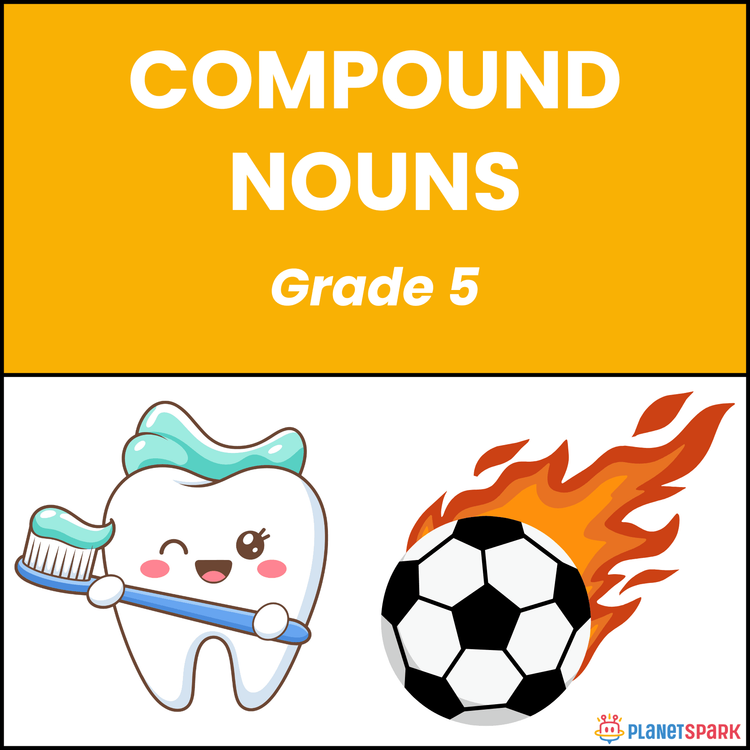
Class 5 Compound Nouns Grammar Practice Worksheet
Class 5EnglishEnglish GrammarFree DownloadPDF
Archita SrivastavaVisit Profile
I am a lively and dynamic educator with four years of teaching experience across online and offline classrooms. I began my journey as a private tutor for three years and currently work as a Public Speaking Expert at PlanetSpark. I have taught students up to high school in CBSE, ICSE, and UP Board, covering all major subjects while guiding them through board exam projects and assignments with creativity, confidence, and a joyful learning spirit. My aim is to build confident speakers and motivated learners who grow with curiosity and joy.
Words That Work Together: Compound Nouns for Class 5
This Grade 5 worksheet introduces students to compound nouns — words formed by combining two smaller words to create a new meaning. Through five engaging exercises — multiple choice questions, fill in the blanks, match the following, underline the incorrect form, and paragraph writing — students learn to identify, form, and use compound nouns correctly in everyday sentences and real-life contexts.
Why Compound Nouns Matter in Grammar?
Understanding compound nouns is an important part of Grade 5 vocabulary and grammar because:
1. Compound nouns are formed by joining two words that together create a new meaning, e.g., notebook, toothbrush.
2. They can be written as one word, two separate words, or hyphenated, and students must learn which form is correct.
3. Using compound nouns correctly makes writing more precise and natural.
4. They are extremely common in everyday English and appear frequently in reading, writing, and conversation.
What's Inside This Worksheet?
This worksheet includes five structured activities that build strong compound noun skills:
Exercise 1 – Multiple Choice Questions
Students choose the correctly formed compound noun from three options to complete each sentence. The task builds awareness of correct spelling and formation of compound nouns. Example: "Rahul writes notes in his __________ during class." → notebook.
Exercise 2 – Fill in the Blanks (Word Pairs)
Students are given a pair of options (e.g., classroom / class room) and must choose the correctly written compound noun to fill the blank. This exercise helps students recognize standard spellings of common compound nouns.
Exercise 3 – Match the Following
Students match each incomplete sentence on the left to the correct compound noun on the right. This activity reinforces recognition of compound nouns in context.
Exercise 4 – Underline the Incorrect Compound Noun
Each sentence contains an incorrectly formed or misspelled compound noun. Students underline the incorrect word, building proofreading and editing skills.
Exercise 5 – Paragraph Writing
Students fill in the blanks in a connected paragraph using appropriate compound nouns. This exercise consolidates all the skills from the previous exercises in a creative writing context.
Answer Key (For Parents & Educators)
Exercise 1 – Multiple Choice Questions
1. b) notebook
2. a) benches
3. b) toothbrush
4. c) doorbell
5. c) cupboard
6. a) water bottle
7. a) train station
8. c) newspaper
9. b) schoolgate
10. b) piggybank
Exercise 2 – Fill in the Blanks
1. classroom
2. doorbell
3. playground
4. class teacher
5. marketplace
6. pencil box
7. railway station
8. newspaper
9. airplane
10. bus stop
Exercise 3 – Match the Following
1. schoolbag
2. toothbrush
3. alarm clock
4. cupboard
5. newspaper
6. notebook
7. supermarket
8. alarm clock
9. bus stop
10. cupboard
Exercise 4 – Underline the Incorrect Compound Noun
1. note book (should be: notebook)
2. benchs (should be: benches)
3. teethbrush (should be: toothbrush)
4. door bell (should be: doorbell)
5. cup board (should be: cupboard)
6. waterbottle (should be: water bottle)
7. trainstation (should be: train station)
8. news paper (should be: newspaper)
9. schoolgate (should be: school gate)
10. piggy bank (correct — no error)
Exercise 5 – Paragraph Writing
1. schoolbag
2. classroom
3. alarm clock
4. notebook
5. canteen / cafeteria
6. newspaper
7. supermarket
8. mobile phone
9. bus stop
10. piggy bank
11. bookshelf
Help your child build a stronger vocabulary — sign up for a Free 1:1 English Grammar Trial Class at PlanetSpark today!
Frequently Asked Questions
Compound nouns are formed by combining two words to create a new meaning, like toothpaste or football.
It helps learners understand word formation and expand vocabulary in CBSE English.
They work by joining words that are related to each other to give a specific meaning.