Class 2 English Worksheet on Picture Sentences
Class 2EnglishEnglish GrammarFree DownloadPDF

Kanishka ModiVisit Profile
I’m an enthusiastic educator with 4 years of experience teaching English, communication skills, and personality development. I’ve guided ICSE, CBSE, and IB students through interactive and practical learning, focusing on building confidence and effective expression. My teaching integrates child psychology principles to create a nurturing and engaging classroom experience.
Class 2 English Worksheet on Picture Sentences
Class 2EnglishEnglish GrammarFree DownloadPDF
Kanishka ModiVisit Profile
I’m an enthusiastic educator with 4 years of experience teaching English, communication skills, and personality development. I’ve guided ICSE, CBSE, and IB students through interactive and practical learning, focusing on building confidence and effective expression. My teaching integrates child psychology principles to create a nurturing and engaging classroom experience.
See It, Say It, Write It: Picture-Based Sentence Writing for Class 2
This Class 2 worksheet helps young learners develop strong sentence-writing skills by observing pictures and expressing what they see in clear, meaningful sentences. Through a variety of picture-based tasks, students learn to describe objects, actions, scenes, daily routines, and predict what may happen next, making sentence writing fun, visual, and engaging.
Why Picture-Based Sentence Writing Matters in Grammar?
This worksheet helps learners:
1. Observe pictures carefully and convert visuals into words.
2. Write complete sentences using correct subject–verb structure.
3. Improve vocabulary and clarity through visual prompts.
4. Develop imagination, sequencing, and prediction skills in writing.
What’s Inside This Worksheet?
This worksheet includes four picture-driven sentence writing activities:
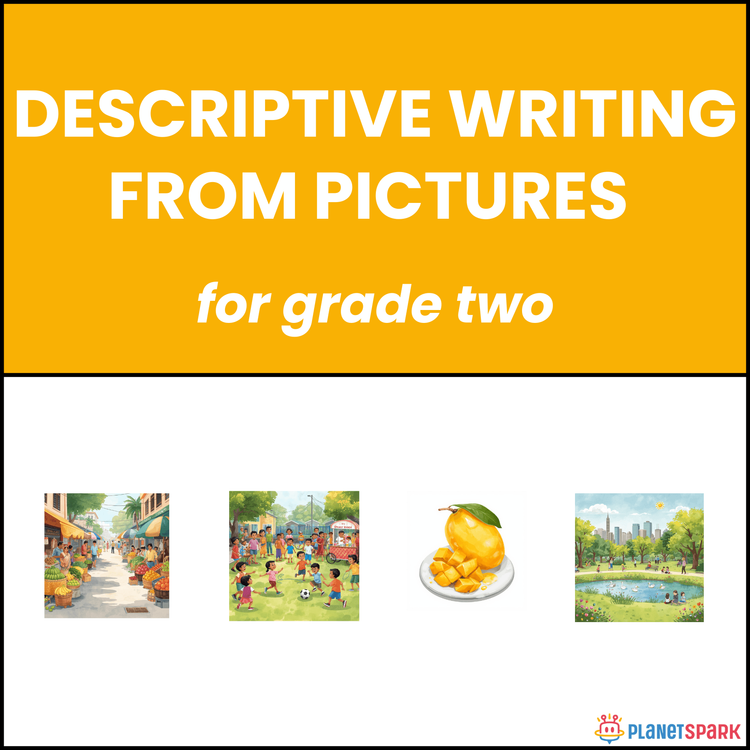
Exercise 1 – Writing Sentences from Pictures
Students look at individual pictures (aeroplane, car, ice cream, suitcase, unicorn, chocolate, bicycle, fish, cake, flower) and write one sentence describing what they see.
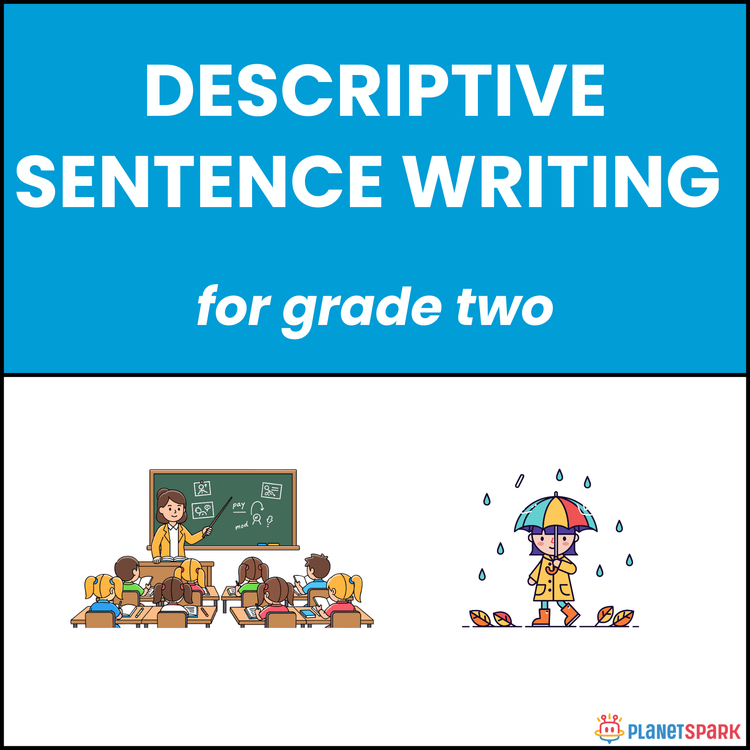
Exercise 2 – Describing Action Pictures
Learners observe action scenes like birds flying, children playing football, flying kites, watering plants, teaching in class, reading, riding a bicycle, cooking, and talking on the phone, and write one sentence for each picture.
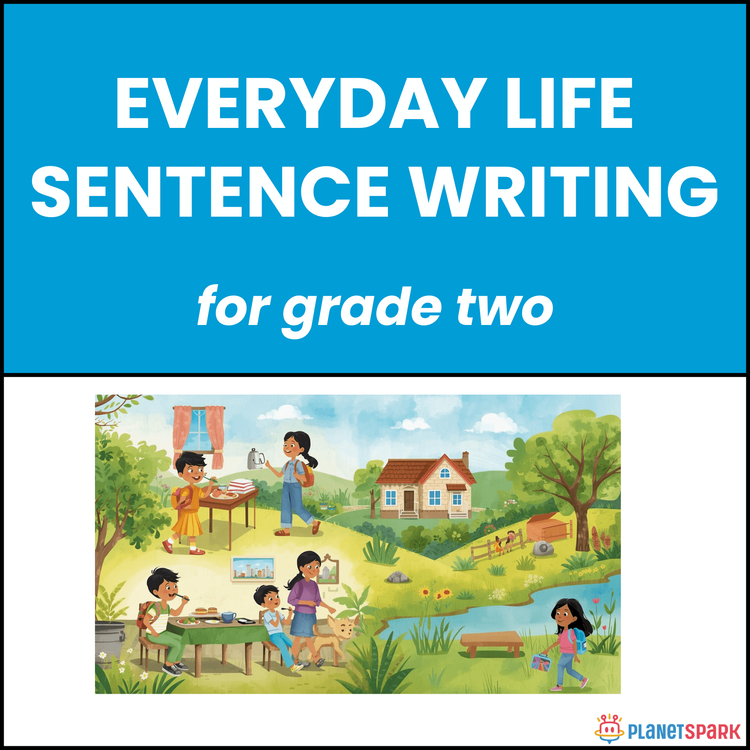
Exercise 3 – Naming Things and Writing a Sentence
Students first name two things they see in each picture (such as mirror, handwash, desks, fruits, plants, playground, bed, stove, animals, shopping bags, car) and then write one sentence describing the scene.
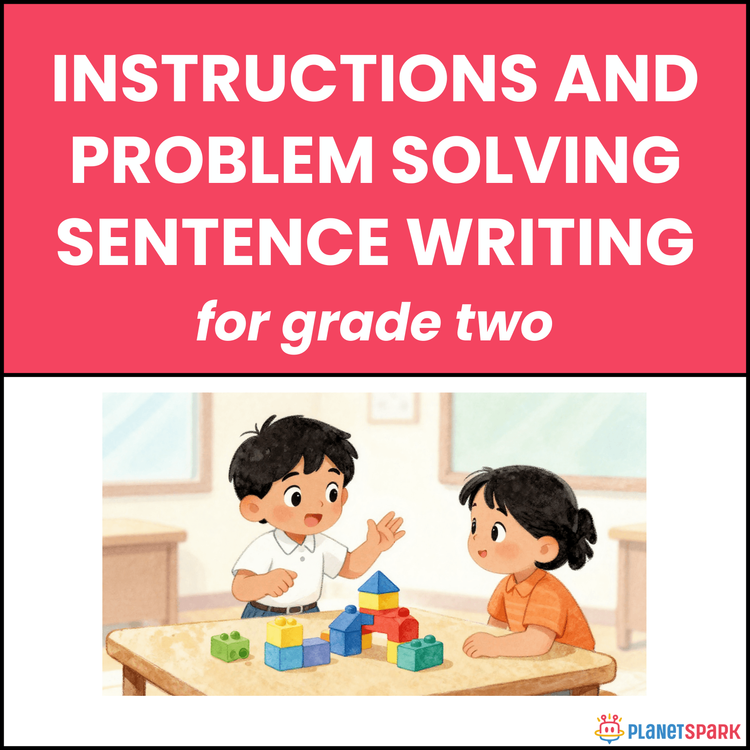
Exercise 4 – Predicting What Happens Next
Learners look at pictures and write one sentence about what will happen next, using imagination and future thinking for scenes like playing football, packing a bag, receiving a gift, reading a book, boarding a bus, thunderstorm clouds, eating food, feeding a baby, cutting a cake, and going to sleep.
✅ Answer Key (For Parents & Educators)
Exercise 1 – Picture Sentences (Sample Answers – Answers may vary)
1. I can see a white and blue aeroplane.
2. The green car is parked on the road.
3. The ice cream looks colourful and tasty.
4. The blue suitcase is ready for travel.
5. The unicorn looks cute and magical.
6. The chocolate bar is sweet.
7. The boy is riding a bicycle.
8. The fish is swimming in water.
9. There is a birthday cake with candles.
10. The flower is pink and beautiful.
Exercise 2 – Action Picture Sentences (Sample Answers – Answers may vary)
1. Birds are flying in the sky.
2. Children are playing football together.
3. The children are flying a kite.
4. The girl is watering the plants.
5. The teacher is teaching the class.
6. The dog is catching the ball.
7. The girl is reading a book.
8. The boy is riding his bicycle.
9. The woman is cooking food.
10. The woman is talking on the phone.
Exercise 3 – Name Two Things & Sentence (Sample Answers – Answers may vary)
1. Things: Mirror, Handwash
Sentence: The boy is brushing his teeth.
2. Things: Blackboard, Desks
Sentence: Children are studying in the classroom.
3. Things: Fruits, Basket
Sentence: The woman is buying fruits.
4. Things: Plants, Pots
Sentence: The girl is taking care of plants.
5. Things: Slide, Swing
Sentence: Children are playing in the park.
6. Things: Bed, Pillow
Sentence: The boy is sleeping peacefully.
7. Things: Stove, Pan
Sentence: The woman is cooking food.
8. Things: Lion, Zebra
Sentence: Animals are living in the forest.
9. Things: Bags, People
Sentence: The couple is shopping together.
10. Things: Car, Driver
Sentence: The boy is driving the car happily.
Exercise 4 – What Will Happen Next? (Sample Answers – Answers may vary)
1. The boy will kick the football.
2. The girl will close her suitcase.
3. The children will open the gift.
4. The boy will finish reading the book.
5. The children will get on the bus.
6. It will start raining heavily.
7. The boy will eat his food.
8. The baby will drink milk.
9. The child will cut the cake.
10. The boy will fall asleep.
Help your child turn pictures into clear sentences and confident writing through engaging visual learning.
🔖Book a free trial!
Frequently Asked Questions
It helps children observe details and form meaningful sentences.
They may look quickly without careful observation.
It encourages slow looking and idea-based sentence writing.